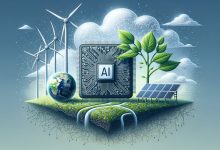

We are running out of time to cut emissions, protect nature, and build resilient communities. The good news: artificial intelligence is no longer just a lab experiment. Today, AI drives sustainable innovation and climate solutions in real industries, cities, and homes. From forecasting renewable energy to spotting wildfires from space, AI can crunch complex data at speed and scale humans cannot. This article explains the biggest problems we face, how AI tackles them, the risks to watch, and practical steps you can apply. If you’ve ever wondered how to turn climate ambition into measurable action, keep reading—because the most promising climate tech now runs on data and algorithms.
Sponsored Ads
The climate challenge: why traditional approaches aren’t enough
Climate change is not a single problem—it’s a system of interconnected issues: rising emissions, fragile grids, stressed water resources, extreme weather, and biodiversity loss. Traditional methods often break these problems into silos. But emissions, energy, transport, and land use are linked. If we add more wind and solar without smarter grid operations, we get curtailment and instability. If we plant trees without monitoring, projects may fail quietly. If we design policies without timely data, implementation lags. The core problem is speed and complexity: the planet is changing faster than our legacy tools can analyze or manage.
Data is everywhere—satellite imagery, weather feeds, smart meters, traffic sensors, supply chain logs—but it’s underused. Useful signals hide in noisy datasets; most organizations lack the models or teams to extract value. This is where AI helps. Machine learning can detect patterns across millions of data points, find anomalies, forecast trends, and propose optimizations, often in near real time. It doesn’t replace engineers, planners, or policymakers—it gives them superpowers by turning messy data into actionable insight. Consider power systems: AI can predict renewable output, optimize battery dispatch, and balance demand in minutes, supporting decarbonization at lower cost. Consider agriculture: AI can flag crop stress from satellite imagery and recommend precise irrigation, cutting water use and emissions from pumps.
Another reason traditional approaches struggle is the gap between planning and execution. Many organizations publish climate strategies but lack operational tools to hit targets. AI bridges that gap by embedding sustainability into daily decisions: routing a delivery truck, tuning an HVAC system, scheduling a cement kiln, or prioritizing maintenance on a wind turbine. Millions of small, data-driven choices add up to big reductions. This is crucial for Gen Z and younger professionals entering the workforce: your climate impact will often come from smarter systems you help design and deploy, not just from policy memos or annual reports. The challenge ahead is to scale what works, standardize best practices, and make AI benefits accessible beyond tech giants.
How AI drives sustainable innovation across energy, cities, and industry
Energy transition lives or dies on integration. AI is already improving renewable forecasting, grid stability, and asset performance. For example, machine learning has been used to predict wind output 36 hours ahead, increasing the economic value of wind by better scheduling into markets (see Google’s early work on wind forecasting: https://blog.google/inside-google/infrastructure/using-machine-learning-to-predict-wind-power/). Grid operators use AI to anticipate short-term load, reducing fossil backup and curtailment. In distributed energy, AI coordinates rooftop solar, batteries, EV chargers, and heat pumps to flatten peaks and save costs. When each device becomes a data point in an intelligent network, the grid gets cleaner and more reliable.
Cities benefit from AI-driven optimization across mobility and buildings. Traffic models can sync signals to cut idle time, fuel use, and air pollution. Computer vision can detect near-miss collisions to redesign dangerous intersections before fatalities occur. In buildings, AI-based controls learn occupancy patterns, weather, and dynamic prices to reduce energy demand by 10–30% without sacrificing comfort. These savings are often immediate and financeable, making them perfect for municipal budgets and commercial real estate portfolios pursuing net-zero targets. When paired with open data initiatives, AI also improves transparency and community trust by showing how interventions affect real people in real time.
Industry is responsible for roughly a quarter of global emissions, with hard-to-abate sectors like cement, steel, and chemicals. AI helps in several ways: process control (e.g., predicting kiln conditions to lower fuel intensity), predictive maintenance (catching failures before they waste energy), supply chain optimization (reducing transport miles and inventory), and quality control (minimizing scrap). Manufacturers combine physics-informed models with machine learning to keep operations both efficient and within safety limits. Even small percentage gains compound: a 2–5% efficiency improvement across thousands of facilities means millions of tons of CO2 avoided.
One reason AI adoption is accelerating is the explosion of geospatial data. Satellite imagery, combined with AI, can track deforestation, methane leaks, and construction progress on renewables. Platforms like Climate TRACE (https://climatetrace.org) estimate emissions from the bottom up, facility by facility, enabling more precise climate accountability. The result is a new kind of transparency that helps investors, regulators, and citizens focus on the highest-impact opportunities.
| AI use case | Sector | Potential impact by 2030 | Source |
|---|---|---|---|
| AI-enabled energy efficiency and grid optimization | Power, buildings | Up to ~4% global emissions reduction potential across use cases | PwC & Microsoft |
| Wildfire detection and flood forecasting from AI | Disaster risk, adaptation | Earlier warnings, reduced losses, faster response | |
| Remote sensing for methane and deforestation | Oil & gas, land use | Measurable reductions via targeted mitigation | Climate TRACE |
Across energy, cities, and industry, the pattern is consistent: AI turns data into action. To move from pilots to scale, organizations should prioritize open standards, shared data layers, and interoperability. That way, efficiency in a factory can coordinate with clean power purchasing and low-carbon logistics, amplifying benefits across the whole value chain.
AI for climate adaptation and nature protection
Even with aggressive mitigation, climate impacts are already here. Adaptation and nature protection are urgent, and AI is a force multiplier. For wildfires, computer vision models analyze satellite data and ground sensors to detect smoke, estimate spread, and guide evacuations. Early alerts can save homes, forests, and lives. For floods, AI blends rainfall forecasts, river gauge data, and topography to predict inundation down to neighborhood levels, enabling cities to pre-stage pumps, close roads, and protect vulnerable residents. Water utilities use AI to detect leaks, reducing non-revenue water and improving resilience during droughts.
Biodiversity monitoring is being transformed by AI. Acoustic sensors in forests, combined with machine learning, can identify species presence and human disturbances like chainsaws. Drones and satellites map habitat change, while models flag illegal activities early. Initiatives such as Global Fishing Watch (https://globalfishingwatch.org) use AI to track fishing vessels and combat illegal, unreported, and unregulated fishing, protecting marine ecosystems and coastal communities that rely on them. For conservation finance, AI can verify nature-based projects with better accuracy, unlocking investment by reducing uncertainty about outcomes.
Food systems face pressure from heat, pests, and water scarcity. AI-driven agronomy advises farmers on planting dates, disease risk, and irrigation timing based on local microclimates and soil data. This increases yields while lowering inputs and emissions. When combined with tools like WRI’s Aqueduct (https://www.wri.org/aqueduct) for water risk, AI helps plan resilient crops and infrastructure. In urban settings, AI analyzes heat islands to guide tree planting and cool roofs where they matter most, protecting health during extreme heat events. Insurers and reinsurers are also using AI to model climate risk at property-level resolution, pricing policies more fairly and incentivizing resilient design.
Adaptation success depends on inclusion. AI systems work best when local communities participate in data collection, model validation, and decision-making. In many regions, low-cost sensors and open-source models are enough to produce high-value insights. For example, simple camera traps analyzed by AI can power citizen science and conservation enforcement. The goal is not to replace local expertise but to reinforce it, so adaptation measures are culturally appropriate, affordable, and effective.
Risks, ethics, and the carbon footprint of AI
AI is not automatically “green.” Training large models can consume significant electricity, and if that power is fossil-based, emissions follow. The footprint varies widely based on hardware, algorithm efficiency, and data center energy mix. Studies such as Strubell et al. (2019) highlighted that training big NLP models can emit substantial CO2; since then, the industry has improved efficiency and increased the use of renewables, but transparency is still inconsistent. You can estimate and reduce your footprint using tools like the ML CO2 Impact calculator (https://mlco2.github.io/impact/), and by running workloads in greener cloud regions, scheduling jobs when renewable output is high, and adopting efficient architectures.
Ethical risks also matter. Biased datasets can lead to unfair outcomes, for example in credit, hiring, or resource allocation for relief. Black-box models may be hard to audit, which is a problem when decisions affect communities and ecosystems. Safety and reliability are critical in infrastructure—an AI suggestion should be explainable and overrideable by humans. Sensitive geospatial data and sensor streams must be protected; transparency and consent are essential when monitoring public spaces. Good governance frameworks include model documentation (datasheets, model cards), bias testing, resilience to adversarial attacks, clear accountability, and impact assessments aligned with regulations.
Another risk is rebound effects: better efficiency can lower costs and trigger higher consumption. For example, smarter logistics may increase total deliveries unless paired with absolute emissions targets. The answer is governance and metrics. Tie AI deployments to science-based targets and track real-world outcomes, not just model accuracy. Adopt green software practices, such as the Software Carbon Intensity standard from the Green Software Foundation (https://greensoftware.foundation). Finally, choose problems where AI’s benefits outweigh costs: grid flexibility, leak detection, methane mitigation, and building controls generally deliver high climate ROI per compute watt.
With responsible design, AI’s net impact can be strongly positive. Cloud providers increasingly match electricity with renewable energy and improve data center PUE (power usage effectiveness). Edge AI can cut data transfer emissions. And open-source communities are standardizing tools for measurement, fairness, and transparency. Treat AI as critical infrastructure: efficient, auditable, secure, and aligned with public interest.
A practical playbook: how to start using AI for sustainability in your organization
Getting from “we should use AI” to “we achieved measurable impact” requires a plan. Start with baselining: build a trusted greenhouse gas inventory, energy profile, and risk map. Combine meter data, invoices, and operations logs with external datasets (weather, market prices, satellite imagery). Avoid perfection paralysis; gaps can be filled iteratively. Next, prioritize use cases by climate ROI and feasibility. Good first projects are energy optimization in buildings, fleet routing, forecasting for renewables, and anomaly detection in industrial processes. These usually deliver savings within months and create internal momentum.
Form a lightweight, cross-functional squad: sustainability lead, data scientist/analyst, domain engineer, and an ops/IT owner. Define a north-star metric (e.g., MWh saved, tons CO2e avoided, water conserved) and a monitoring plan. Build small, then scale. Proof-of-concept in one site, then replicate to ten, then fifty. Standardize data schemas and dashboards so insights travel. Use open-source where possible and open standards for interoperability. For geospatial tasks, tools like Google Earth Engine, Sentinel Hub, or open EO stacks help you prototype quickly; for time-series forecasting, libraries such as Prophet, GluonTS, or skforecast can accelerate development.
Procurement matters. Ask vendors for transparent energy use, model interpretability, and privacy protections. Prefer solutions that can run in energy-efficient cloud regions or at the edge. Align contracts with performance—share savings and risks. For internal capacity, invest in training: upskill analysts on Python, SQL, and basic ML; train engineers on data pipelines and APIs; teach nontechnical teams to interpret model outputs. Document everything—data lineage, model assumptions, governance decisions—so your program survives staff changes and audits.
Finally, embed AI into decision cycles, not just dashboards. Connect forecasts to automated controls (e.g., HVAC setpoints), integrate anomaly alerts with maintenance tickets, and tie emissions data to procurement approvals. Celebrate wins, publish case studies, and share code or methodologies when possible. You’ll build credibility with leadership, regulators, and customers—and help the wider ecosystem scale what works faster.
Quick Q&A
Q1: Is AI really necessary for climate action?
A: Not for everything, but for complex, data-heavy problems—like integrating renewables, detecting leaks, or modeling floods—AI accelerates results and lowers costs. It complements, not replaces, common-sense measures like insulation and public transit.
Q2: Isn’t AI too energy-hungry to be “green”?
A: AI has a footprint, but it varies widely. Choose efficient models, run in green data centers, and target high-impact use cases. In many deployments, operational savings and avoided emissions far exceed compute costs.
Q3: What skills do we need first?
A: Data literacy and domain knowledge. Start with data engineers/analysts, a sustainability lead, and an ops owner. You can partner with vendors or universities for advanced modeling while you build internal capability.
Q4: How do we ensure fairness and trust?
A: Use representative data, document models, test for bias, provide explanations, and keep a human in the loop for critical decisions. Follow recognized frameworks and publish impact metrics where possible.
Conclusion: from proof-of-concept to planet-scale impact
We began with the core problem: the climate crisis is moving faster than our traditional tools can handle. AI changes the tempo. It helps forecast, optimize, and verify at scales that match the challenge—across energy systems, cities, industry, and nature. You’ve seen how AI can stabilize grids, slash building energy, guide disaster response, protect biodiversity, and streamline industrial processes. You’ve also seen the risks: energy use, bias, privacy, and rebound effects. The path forward is responsible AI—efficient, transparent, and aligned with science-based targets.
Now it’s your turn to act. Start with a baseline, pick a high-ROI use case, and assemble a small cross-functional team. Choose open standards, measure outcomes, and scale what works. If you lead a company, set clear targets and tie incentives to measurable savings and emissions reductions. If you’re a student or early-career professional, build skills in data, code, and climate fundamentals—and join organizations shipping real solutions. If you’re a policymaker, support data access, open science, and grid modernization so AI can deliver public value safely and fairly.
The transition is not about one breakthrough; it’s about millions of smart decisions made faster with better information. AI won’t solve climate change alone, but it can help us do more with less, sooner. Commit to one concrete step this week—pilot an energy optimization tool, explore satellite data for your region, or evaluate a vendor’s green compute strategy. Share your progress publicly to inspire others and raise the bar. The world needs your leadership and your curiosity. What’s the first sustainability problem you’ll point intelligent tools at tomorrow? Keep moving—small, consistent actions powered by data can change the trajectory, and the planet is counting on us.
Outbound resources
– International Energy Agency: data and analysis on energy systems: https://www.iea.org
– IPCC assessment reports: climate science and scenarios: https://www.ipcc.ch
– PwC & Microsoft report on AI and climate impact: link
– Google AI wildfire detection overview: link
– Climate TRACE emissions tracking: https://climatetrace.org
– Global Fishing Watch: protecting oceans with AI: https://globalfishingwatch.org
– WRI Aqueduct water risk platform: https://www.wri.org/aqueduct
– ML CO2 Impact calculator: https://mlco2.github.io/impact/
– Green Software Foundation: https://greensoftware.foundation
Sources
– PwC UK and Microsoft. “How AI can enable a sustainable future.” 2020. PDF
– Google. “Using machine learning to