Sponsored Ads
If you’ve ever wondered how AI can generate photorealistic faces, upscale old videos, or turn sketches into lifelike scenes, the answer often involves Generative Adversarial Networks (GANs). Generative Adversarial Networks (GANs) are a breakthrough in machine learning that pit two neural networks against each other to create new, realistic data—from images to audio and beyond. The main challenge for most readers is not just understanding how GANs work, but how to apply them responsibly and effectively in the real world. This guide breaks down the essentials with clear explanations, practical steps, and credible references so you can quickly grasp the potential of GANs and start exploring their applications with confidence.
What GANs Are and Why They Matter Today
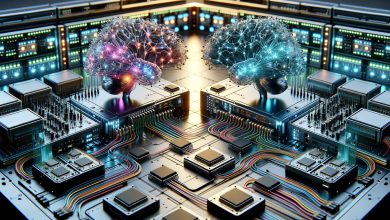
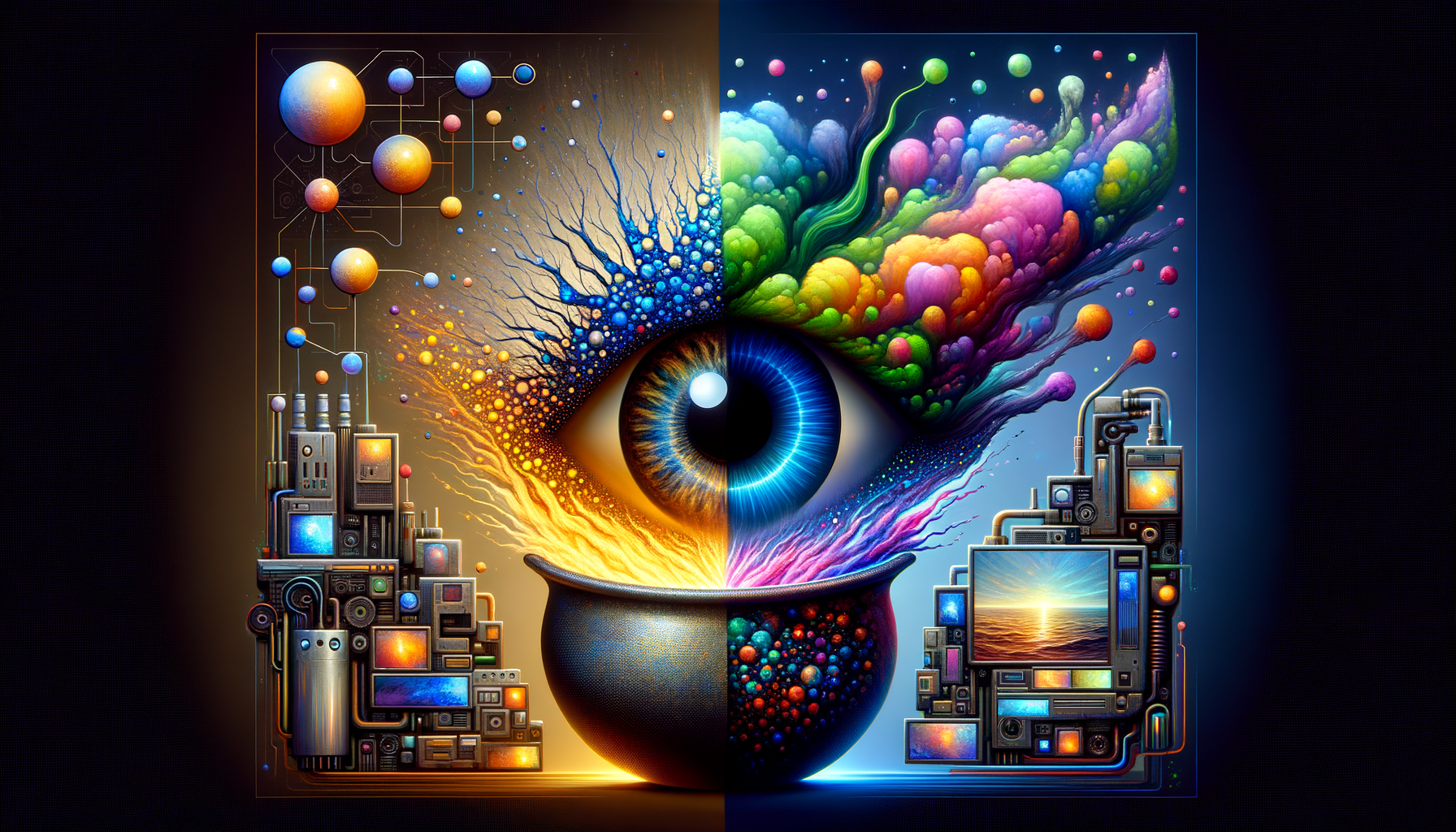
GANs are a class of generative models introduced by Ian Goodfellow and colleagues in 2014. The idea is simple yet powerful: train two models simultaneously—the generator, which tries to create data, and the discriminator, which tries to detect whether the data is real (from the training set) or fake (from the generator). Over time, the generator learns to produce outputs that are increasingly hard to distinguish from real samples. Think of it as a cat-and-mouse game: the better one gets, the better the other must become, pushing both to improve. This adversarial training dynamic is what makes GANs capable of producing strikingly realistic content.
Why does this matter today? Because high-quality synthetic data unlocks practical value across industries. Designers can prototype product visuals faster. Film studios can enhance frames or create new scenes. Healthcare researchers can generate rare medical images for training AI systems without risking patient privacy. Retailers can create diverse product shots at scale. Even small businesses can improve visuals for marketing without hiring large creative teams. GANs democratize content creation by reducing cost, time, and technical barriers.
For Gen Z readers who grew up with social media filters and AI effects, GANs are the engine behind many of those transformations. Models like StyleGAN can create faces that do not belong to any real person, and CycleGAN can translate images across domains (e.g., horses to zebras) without paired examples. These capabilities are not just cool—they’re valuable for data augmentation, simulation, and personalization. However, the same power also raises questions about deepfakes, misinformation, and copyright. Understanding how GANs work is step one; using them responsibly is the long-term game.
In short, GANs matter because they deliver realism. They turn noise into meaning. And as they mature alongside diffusion models and other generative techniques, their role in creative workflows, research, and industry will only grow. Whether you’re building a startup prototype, learning AI for the first time, or leading a tech team, knowing the strengths and limits of GANs helps you make smarter choices about tools, datasets, and outcomes.
Inside the Architecture: From Noise to Realistic Data
At the core of every GAN are two neural networks trained together: the generator (G) and the discriminator (D). The generator takes random noise—usually a vector sampled from a normal or uniform distribution—and transforms it through layers (dense, convolutional, upsampling) into a synthetic sample. The discriminator takes both real samples (from the dataset) and fake samples (from the generator) and outputs a probability of “realness.” During training, G tries to fool D, while D tries not to be fooled. Mathematically, they play a minimax game, optimizing opposing objectives.
Several architectural choices affect performance. Convolutional layers and progressive growing helped early GANs stabilize training for images. StyleGAN introduced a style-based generator with adaptive instance normalization (AdaIN) to separate coarse, middle, and fine features, enabling unmatched control over attributes like pose, hair, or lighting. BigGAN scaled models and batch sizes to improve class-conditional generation on ImageNet. Conditional GANs (cGANs) feed labels to both G and D, guiding the generator to produce specific categories (e.g., shoes vs. shirts). CycleGAN removed the need for paired training data by enforcing cycle-consistency: translate from domain A to B and back to A and you should recover the original sample.
Training is where many practitioners struggle. Common issues include mode collapse (the generator outputs limited varieties), vanishing gradients (the discriminator saturates and gives the generator little learning signal), and instability (losses oscillate without convergence). Practical strategies exist: use Wasserstein GAN (WGAN) with gradient penalty to stabilize gradients; adopt spectral normalization to constrain discriminator capacity; apply label smoothing and one-sided label noise; balance updates (e.g., multiple D steps per G step or two-time-scale update rule, TTUR); and keep batch normalization consistent. Evaluation metrics also matter: Inception Score (IS) and Fréchet Inception Distance (FID) estimate quality and diversity, with FID generally preferred because it correlates better with human judgment.
It’s important to compare GANs to other modern generative approaches. Diffusion models and autoregressive transformers have achieved state-of-the-art quality in many domains, particularly text-to-image and audio. Still, GANs remain competitive in settings where speed at inference matters (GANs can be fast once trained), where paired or domain-specific translation is needed (pix2pix, CycleGAN), or where fine control over visual style is essential (StyleGAN family). Many pipelines now hybridize: a diffusion model for coarse generation and a GAN-based super-resolver for crisp details, or a GAN for fast previews followed by diffusion refinement. The takeaway: GANs are not obsolete—they’re specialized, efficient tools that shine when you need rapid, high-fidelity synthesis or domain translation with tight control.
Real-World Applications: Images, Audio, Text, and Beyond
GANs have moved from research labs into production across industries. In creative fields, they generate faces for avatars, synthesize textures for games, and provide instant concept art variations. StyleGAN-based systems let artists explore a “latent space” of possibilities: adjust a slider and see the age, hair color, or expression of a portrait change smoothly. For media restoration, SRGAN and ESRGAN upscale low-resolution images and video, turning vintage footage into watchable content. Content platforms use GANs to enhance thumbnails or remove artifacts, improving viewer experience and click-through rates.
In e-commerce and fashion, conditional GANs produce product images in new colors or environments, reducing the need for expensive photoshoots. Virtual try-on systems combine segmentation, warping, and generative models to fit garments on different body types. Architecture and interior design teams translate sketches into photoreal renders for rapid iteration. Marketing teams use GAN-augmented A/B tests, generating multiple banner variations to discover which combination of color, layout, and context performs best.
Healthcare uses GANs more cautiously but meaningfully. Researchers synthesize medical images (e.g., MRI or retinal scans) to augment datasets, especially for rare conditions where data scarcity limits model performance. Synthetic data can help protect patient privacy when sharing datasets, though rigorous validation and bias checks are essential. In geospatial analysis, GANs perform super-resolution on satellite imagery, enhancing fine details for environmental monitoring, agriculture, and disaster response. In robotics and autonomous driving, domain adaptation via CycleGAN helps models trained in simulation transfer to the real world by translating textures and lighting.
Audio and speech benefit too. Voice conversion systems map one speaker’s voice to another while preserving content, and music generation explores new timbres and styles. While diffusion-based audio has surged, GANs still power fast vocoders and speech enhancement tools that run on edge devices. For text, pure GANs are less dominant (transformers excel here), but multimodal setups use GAN discriminators to judge plausibility of generated captions or to refine images conditioned on textual prompts.
Even privacy and security find uses. GAN-based anonymization creates non-identifiable faces that match certain attributes of real people in a dataset, supporting stricter privacy requirements. At the same time, cybersecurity teams study adversarial examples and GAN-based attacks to harden defenses; detection models trained with GAN-generated variations become more robust to real-world noise and manipulation. In short, if your work touches images, audio, simulation, or personalization, there’s a high chance GANs can accelerate your pipeline or expand your creative palette.
Common GAN Variants and What They’re Good At
Different GAN flavors exist for different needs. Understanding the options helps you pick the right tool and save weeks of trial-and-error. Below is a quick reference for popular variants and their typical uses.
| Variant | Key Idea | Typical Use Case |
|---|---|---|
| DCGAN | Convolutional layers for stable image generation | Entry-level image synthesis on simple datasets |
| WGAN / WGAN-GP | Uses Wasserstein distance, gradient penalty | Stabilizing training, reducing mode collapse |
| Conditional GAN (cGAN) | Condition on labels or attributes | Class-specific generation, controllable outputs |
| pix2pix | Paired image-to-image translation | Maps edges-to-photo, maps, facades, inpainting |
| CycleGAN | Unpaired translation with cycle-consistency | Style transfer across domains without paired data |
| StyleGAN/StyleGAN2/3 | Style-based generator with disentangled controls | High-fidelity faces, avatars, art exploration |
| ESRGAN/SRGAN | Perceptual losses for super-resolution | Upscaling images/video, restoration |
| BigGAN | Scaled-up, class-conditional training | High-quality class-specific images on large datasets |
Use this table as a starting point. If you need clean, controllable portraits, StyleGAN is a strong choice. If you’re translating scenes between domains and lack paired examples, CycleGAN fits. If you primarily need upscaling, ESRGAN/SRGAN deliver crisp details. When training is unstable, WGAN-GP can help. Your selection should align with data availability (paired vs. unpaired), desired control (labels vs. freeform), and compute constraints (some models require powerful GPUs and large batch sizes). Careful model choice upfront prevents wasted cycles and helps you meet deadlines.
Build Your First GAN: Practical Steps, Tools, and Tips
Getting hands-on is the fastest way to understand GANs. You don’t need a research lab—just a GPU-enabled environment (local or cloud) and a clear plan. Start with a simple dataset like MNIST digits or CIFAR-10, then scale up as you gain confidence.
First, set up your framework. PyTorch and TensorFlow/Keras both offer strong support and community tutorials. Create a clean project structure: data loaders, model definitions, training loop, logging/visualization (e.g., TensorBoard or Weights & Biases). Keep runs reproducible by fixing random seeds and saving checkpoints. Use small batch sizes if your GPU is limited; gradient accumulation can help simulate larger batches.
Second, implement a baseline architecture such as DCGAN. Define the generator to upsample from a latent vector (e.g., size 64 or 128) using transposed convolutions or upsampling followed by convolution. The discriminator should downsample the input image to a single sigmoid or linear output. Use LeakyReLU activations in the discriminator, ReLU in the generator, and try batch normalization in both (with care in the discriminator to avoid over-smoothing). Adam optimizer with betas around (0.5, 0.999) is a common starting point.
Third, stabilize training with proven tricks. Try label smoothing (e.g., real labels in [0.8, 1.0]) and occasional one-sided label noise. Balance update steps, sometimes training the discriminator multiple times per generator step. If losses diverge, switch to WGAN-GP: replace the discriminator with a “critic” (no sigmoid), use Wasserstein loss, and enforce gradient penalty. Spectral normalization in the discriminator constrains Lipschitz continuity, making training less chaotic. Monitor FID every few epochs to track progress beyond visual inspection.
Fourth, iterate on data and regularization. Clean datasets lead to better results. Use data augmentation (random crops, flips, color jitter) to improve diversity, but avoid augmentations that break semantics. Consider DiffAugment or ADA (adaptive discriminator augmentation) if overfitting is suspected. If mode collapse appears (many outputs look similar), reduce learning rates, increase noise in labels, or adjust architecture capacity. Keep a gallery of fixed latent vectors to compare snapshots over time.
Finally, add control and scale. For conditional generation, feed class embeddings to both generator and discriminator. For high-resolution synthesis, study progressive growing or StyleGAN-style mapping networks. If compute is limited, train at lower resolution and add a GAN-based super-resolver. When moving to production, quantize or prune models for speed, and prepare safety checks (content filters, watermarking) before release. Document your choices and results; these notes become invaluable when debugging or presenting your work.
Helpful starting points include PyTorch’s official DCGAN tutorial and TensorFlow’s GAN examples. Managed platforms like Google Colab, Kaggle Notebooks, and cloud GPUs let you prototype quickly. Keep your first goal modest—convincing 64×64 images in a week is realistic—and build up from there.
Risks, Ethics, and Responsible Use
As GANs become easier to use, responsible deployment becomes essential. The most visible risk is deepfakes: synthetic media that impersonate people or fabricate events. While entertainment and satire can be legitimate uses, malicious deepfakes threaten trust, privacy, and safety. Organizations must adopt guidelines for provenance and disclosure, such as watermarking outputs and attaching content credentials. The Coalition for Content Provenance and Authenticity (C2PA) provides standards for embedding provenance metadata, and major platforms are starting to support these signals to help users verify media origins.
Bias is another concern. GANs learn from data; if the dataset skews toward certain demographics or aesthetics, generated outputs reflect and potentially amplify those biases. For example, a face generator trained on unbalanced data may underrepresent certain skin tones or features. Mitigation involves curating diverse datasets, auditing outputs for fairness, and documenting model cards that disclose limitations. When used for data augmentation in sensitive domains (like healthcare or hiring), ensure that synthetic data does not distort real-world distributions or introduce artifacts that harm downstream performance.
Intellectual property and consent are vital. Training on copyrighted material without permission can trigger legal issues. Even if a model generates “new” images, style mimicry may raise ethical questions. Creative communities increasingly call for opt-in/opt-out dataset governance and clearer licensing. If your project touches commercial content, consult legal counsel and consider licenses that allow derivative training or synthetic outputs.
Detection and governance tools are improving. GAN-generated media can be flagged using classifiers, frequency domain analysis, or ensembles trained with adversarial augmentation. However, a detection arms race exists: as generators improve, detectors must evolve. For high-stakes contexts (elections, financial markets), combine technical measures with workflow controls: human-in-the-loop reviews, provenance metadata, rate limits, and platform policies. Follow risk management frameworks to assess likelihood and impact, define safeguards, and monitor in production.
Ultimately, responsible use is about transparency and intent. Disclose when content is AI-generated. Avoid impersonation and harmful manipulation. Build for accessibility and inclusivity. When practitioners adopt these habits, GANs can serve as tools for innovation rather than instruments of harm, unlocking creativity while preserving trust.
Frequently Asked Questions
Q: Are GANs better than diffusion models?
A: It depends on the task. Diffusion models often lead in state-of-the-art photorealism and text-to-image quality, but GANs excel in fast inference, domain translation (pix2pix, CycleGAN), and fine-grained stylistic control. Many teams combine both: diffusion for initial generation, GANs for super-resolution or style refinement.
Q: Do I need a high-end GPU to train GANs?
A: Not for small projects. You can start on free tiers like Google Colab for 64×64 images. For high-resolution or large datasets, a modern GPU with at least 12–24 GB VRAM is helpful. Techniques like gradient accumulation and mixed precision can stretch limited resources.
Q: How do I evaluate GAN outputs objectively?
A: Use metrics like FID (lower is better) alongside human evaluation. Track diversity and quality across classes if using cGANs. Always pair metrics with qualitative checks—numbers can miss artifacts or biases that humans spot quickly.
Q: Are GAN-generated images legal to use commercially?
A: Laws vary by jurisdiction. If the model was trained on licensed or proprietary data, you may need permissions. Avoid outputs that replicate identifiable individuals or copyrighted styles without consent. When in doubt, seek legal advice and disclose AI involvement.
Q: How can I reduce harmful uses like deepfakes?
A: Add watermarks or content credentials, respect consent, avoid impersonation, and follow platform policies. Consider publishing detection tools and model cards that explain intended use and limitations.
Conclusion: Turn Adversarial Learning into Positive Impact
We explored how Generative Adversarial Networks work, why they’re still relevant, where they shine in real-world applications, and how to build them responsibly. You learned the roles of generators and discriminators, the training tricks that stabilize learning, the strengths of key variants like StyleGAN, CycleGAN, and WGAN-GP, and the many ways GANs power creativity, restoration, and simulation. We also discussed the risks—deepfakes, bias, and IP—and the practical steps to mitigate them through dataset curation, transparency, and provenance standards.
Your next move is simple: pick a small, meaningful project and start. Spin up a notebook on PyTorch or TensorFlow, choose DCGAN on a modest dataset, and log your progress. As you gain confidence, try conditional generation, then iterate toward higher resolution or domain translation. Add evaluation with FID, experiment with WGAN-GP for stability, and keep a visual gallery of fixed latents to track improvement. If you’re working in a team, establish a basic risk checklist: data rights