
Traffic is getting more dangerous, commutes are eating our days, and transportation still leaves too many people behind. Autonomous vehicles promise a different path. By combining advanced sensors, AI, and smart infrastructure, self-driving cars aim to make travel safer, faster, and more inclusive. In this article, we break down how autonomous vehicles work, what benefits and trade-offs to expect, and the realistic steps you can take today to prepare for a driverless future. If you’re curious about self-driving cars and how they will transform travel, you’re in the right place.
Sponsored Ads
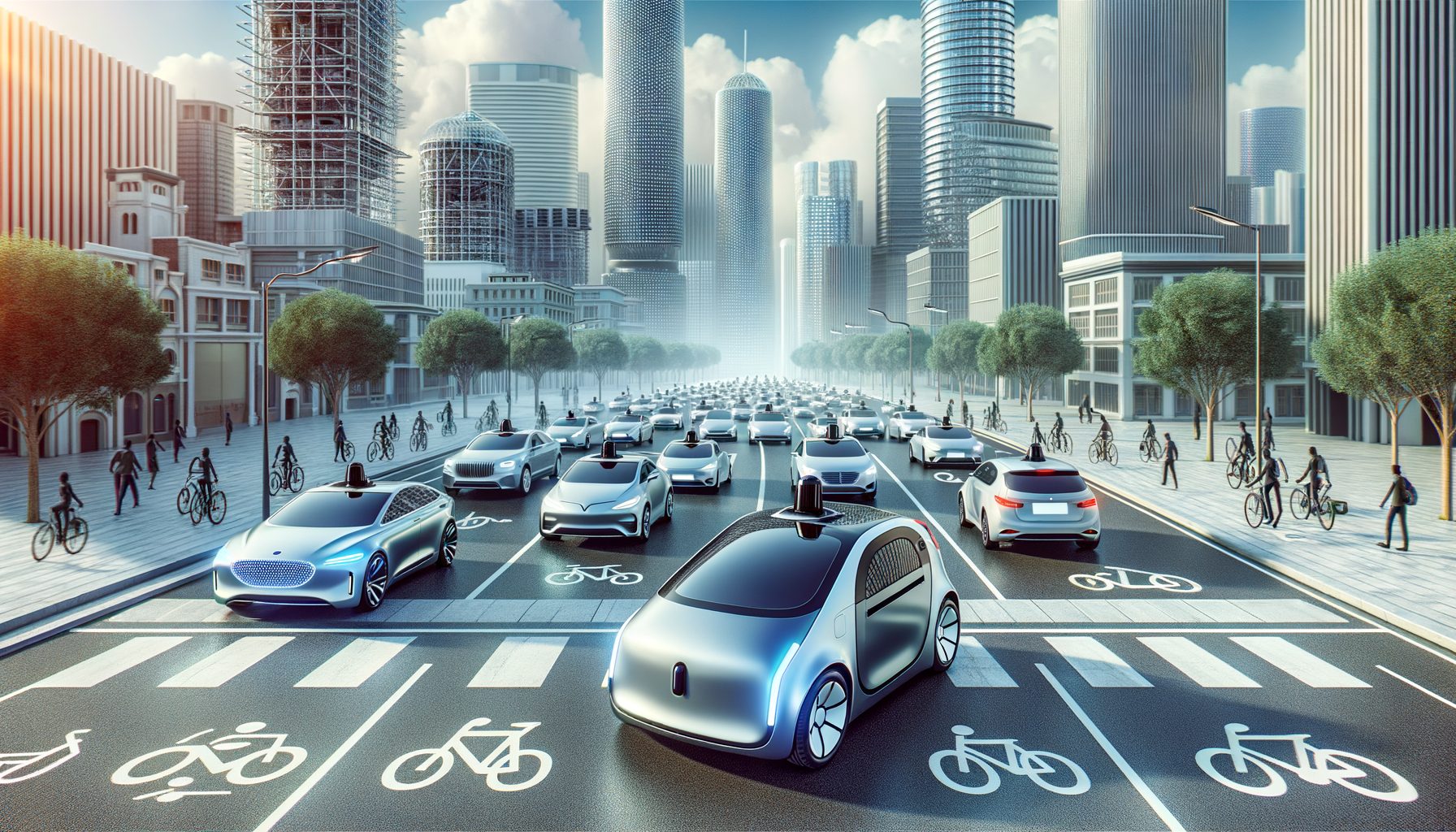
The real problem autonomous vehicles are trying to solve
Most of us accept traffic and road risk as facts of life, but the numbers are sobering. The World Health Organization estimates that road traffic crashes kill over a million people worldwide each year, with tens of millions more injured. Beyond safety, time is the other hidden cost: in major cities, commuters can lose dozens of hours annually to congestion. For people who cannot drive due to age, disability, or cost, mobility can feel like a locked door. And transportation is a major contributor to greenhouse gas emissions in many countries. These combined pains—safety, time, access, and environmental impact—are the reasons autonomous vehicles exist. They propose to remove or reduce human error, optimize traffic flows, expand door-to-door access, and make more efficient use of vehicles and energy.
Think about a typical day. You might hesitate at a blind intersection, miss a turn while changing the music, or circle the block for parking. Human driving is cognitively demanding, and even good drivers make mistakes. Self-driving systems are designed to be vigilant all the time: sensors do not look at their phones, and algorithms do not get tired. In pilot zones today, robotaxis are already showing what a world with lower friction travel could feel like—on-call, point-to-point rides without the stress of driving. For logistics, autonomous delivery vans and freight trucks can keep goods moving overnight, smoothing supply chains and reducing costs that eventually hit consumer prices.
Of course, autonomy is not magic. Edge cases—unusual road layouts, heavy snow, unpredictable human behavior—still challenge even the best systems. But the direction of travel is clear: as software gets better and operations expand, autonomous vehicles can chip away at the core pain points people experience daily. The central idea is simple: by taking the most error-prone part of driving (human reaction and distraction) and replacing it with consistent sensing and control, we can build roads that feel calmer, fairer, and safer for everyone.
How self-driving cars work: sensors, AI, and the path to safety
Modern autonomous vehicles fuse multiple sensor types with AI to perceive the world and make driving decisions. Cameras provide high-resolution images for lane lines, traffic lights, and signs. LiDAR measures precise distances using laser pulses, creating a 3D map of the environment with centimeter-level accuracy. Radar sees through fog and rain, tracking the speed and distance of surrounding objects. Some systems also include ultrasonic sensors for close-range detection. These signals feed into a perception stack that identifies vehicles, pedestrians, cyclists, road edges, and obstacles in real time.
On top of perception sits prediction and planning. Prediction models estimate how nearby actors will move over the next few seconds—will that cyclist maintain speed, will that vehicle merge? Planning modules then generate safe paths and speeds, balancing comfort, legal rules, and safety margins. Finally, control algorithms translate plans into steering, acceleration, and braking. This loop runs many times per second, allowing the vehicle to adapt continuously. In parallel, high-definition maps and localization algorithms help the system know its exact position, while connectivity allows real-time updates and remote assistance in edge cases.
Autonomy is categorized by levels defined by the SAE J3016 standard. Levels 0–2 assist the driver (think adaptive cruise control or lane-keeping). Level 3 allows the system to drive under specific conditions but expects a human to take over when requested. Levels 4–5 are where the vehicle can handle all driving tasks in a defined area (Level 4) or everywhere (Level 5), without any expectation of human intervention. Most driverless services operating today are Level 4, restricted to an operational design domain—certain neighborhoods, speeds, and weather conditions—so the system remains safe.
Safety validation is a layered effort. Companies run billions of simulated miles to test rare scenarios, use closed-course tracks for controlled stress tests, and apply incremental rollouts in geofenced areas. Independent bodies and researchers analyze performance, and regulators set rules for testing and deployment. For example, the United Nations Economic Commission for Europe has developed regulations for automated lane keeping systems, and national agencies publish safety frameworks and reporting guidelines to improve transparency. If you’re new to the topic, a helpful primer is the SAE’s standard on automation levels and national guidance from agencies like the U.S. National Highway Traffic Safety Administration, which outline expectations for safety cases, data collection, and incident reporting. The goal is not to claim perfection, but to reduce risk below human baselines and keep improving as the fleet learns.
Benefits and trade-offs you’ll actually feel
The promise of autonomous vehicles becomes real only if everyday life gets better. Here’s what most people care about and what current evidence suggests.
Safety: Human error contributes to the majority of crashes. A self-driving stack that remains attentive and follows rules consistently can cut many common crash types—rear-ends from distraction, risky left turns, or speeding. Early driverless services have reported encouraging safety trends in their operating areas, though long-term data across diverse cities and weather is still accumulating. The aim is to get well below human crash rates for comparable traffic conditions.
Time and convenience: Imagine pressing a button and getting a safe ride at 2 a.m., or sending a driverless car to pick up a family member without rearranging your day. AVs can also curb the hunt for parking by dropping riders and repositioning, which helps traffic flow. For logistics, autonomous freight can move goods at off-peak hours, reducing daytime congestion.
Accessibility and equity: AV fleets can extend mobility to people who cannot drive—older adults, people with disabilities, and those in transit deserts. When priced and deployed thoughtfully, they can complement public transit by solving first- and last-mile gaps.
Environment: The sustainability impact depends on vehicle design and usage. Electric, shared AVs can reduce per-ride emissions and enable smoother driving that uses less energy. But if empty vehicles cruise or replace public transit, overall miles traveled could rise. Policy and pricing—like curb management and incentives for pooling—will guide outcomes.
Jobs and economics: AVs will shift work. Some driving roles may shrink over time, while new jobs in remote operations, fleet maintenance, safety assurance, and AI engineering will grow. Businesses can benefit from lower logistics costs and higher reliability. Cities can reclaim curb space from parking to green areas or bike lanes, improving public life.
Below is a snapshot of metrics people ask about and where they may be heading.
| Metric | Today (human-driven baseline) | Autonomous trajectory (near term) | Notes/Source |
|---|---|---|---|
| Road fatalities | ~1.19 million/year worldwide | Goal: reduce below human baseline in defined areas | WHO road safety |
| Crash causes | Human error in majority of cases | AVs designed to eliminate distraction/speeding errors | NHTSA |
| Emissions per urban trip | Varies; ICE vehicles dominate in many markets | Lower with electric, shared AVs; higher if empty miles rise | IEA transport |
| First/last-mile access | Gaps in many suburbs | Robotaxis/shuttles fill transit gaps | ITF research |
| Freight reliability | Driver shortages, variable hours | 24/7 autonomous hauling in controlled corridors | McKinsey mobility |
Trade-offs are real. AVs need robust mapping and favorable weather, so deployments start small. Privacy must be protected because vehicles collect sensor data. And public trust is earned, not granted—transparent reporting, clear rider support, and responsive governance are essential. For most people, the best outcome blends AVs with strong public transit, safe cycling and walking, and smart policies that nudge behavior toward efficient, low-emission trips.
How to prepare: steps for individuals, businesses, and cities
Autonomous mobility is arriving unevenly—some neighborhoods already have driverless rides, while others will wait years. Whatever your location, here are practical steps to get ready.
For individuals:





- Learn the basics. Understand the difference between driver assistance (you’re still responsible) and driverless service (the vehicle is responsible). A quick read of the SAE automation levels helps you set expectations.
- Try a pilot. If a robotaxi operates near you, take a few rides at different times of day. Notice how it handles merges, unprotected turns, and busy crosswalks. Share feedback through the app—operators often adjust based on rider input.
- Plan for new habits. With driverless rides, you might reclaim commute time—use it for messages, rest, or reading. If you own a car, consider whether a mix of transit, cycling, and occasional AV rides could lower costs.
- Privacy and safety. Review what data is collected and how incidents are handled. It’s okay to ask operators about their safety case and reporting.
For businesses:
- Map use cases. Retailers and restaurants can explore autonomous delivery for late-night orders. Warehouses can evaluate autonomous yard tractors or middle-mile pilots to stabilize schedules.
- Pilot, measure, iterate. Start small—one route, one neighborhood, one shift. Track on-time rates, cost per delivery, customer satisfaction, and incident rates. Use data to decide whether to scale.
- Upskill your team. Train staff for fleet operations, remote assistance, and sensor maintenance. Roles that mix operations and data will be in high demand.
- Integrate with existing systems. Connect AV dispatch with your inventory, CRM, and customer notifications to avoid last-mile surprises.
For cities and regulators:
- Define clear operating rules. Align with best-practice frameworks such as UNECE vehicle regulations and national guidance. Require incident reporting and data-sharing that protects privacy.
- Prioritize safety and equity. Set performance benchmarks for crash reduction and accessibility. Encourage service in underserved areas, not only high-demand zones.
- Manage the curb. Replace free curb parking with dynamic loading, AV pick-up zones, and protected bike/scooter lanes. This prevents congestion from idle vehicles.
- Blend modes. Use AVs to connect riders to high-capacity transit. Pilot on-demand shuttles in areas with limited bus frequency.
Trust builds through transparency. Cities can host public demos, publish AV safety dashboards, and maintain open feedback channels. Operators can release safety reports, like detailed performance in specific service areas, allowing independent scrutiny. The path forward is collaborative: technology, policy, and community norms all move together.
FAQ
Are autonomous vehicles safe today?
In defined areas and conditions, leading operators report safety performance that aims to be at or below human crash baselines. However, performance varies by city, weather, and traffic complexity. Look for transparent, third-party-reviewed safety reports and clear incident disclosures.
Will self-driving cars eliminate the need for public transport?
No. The most efficient cities combine high-capacity transit for busy corridors with AVs for first/last-mile and off-peak service. AVs are a complement, not a replacement, especially where space and sustainability matter.
What about jobs for drivers?
Some roles will change or decline over time, while new jobs will grow in fleet operations, maintenance, remote assistance, and software. Policymakers and companies can support reskilling to smooth the transition.
When will I be able to buy a fully self-driving car?
Driver assistance and some hands-off features are available now in certain markets, but consumer-owned Level 4/5 vehicles that work everywhere remain years away. Expect continued expansion of driverless ride-hailing in specific cities first.
How are AVs regulated?
Regulations are evolving. International bodies like the UNECE set technical standards, while national and local regulators approve testing and operations. In the U.S., see NHTSA guidance for frameworks and safety expectations.
Conclusion
Autonomous vehicles are built to tackle the problems we feel every day—unsafe roads, lost time, unequal access, and unnecessary emissions. We explored how self-driving systems work, from sensors and AI to the operational domains that keep them safe. We looked at practical benefits like fewer crashes, easier access, and smoother logistics, along with trade-offs around privacy, weather limits, and the risk of increased miles traveled if policies lag. We also mapped out concrete steps for individuals, businesses, and cities to prepare, including pilot projects, skills development, curb management, and transparency measures that earn public trust.
Now it’s your move. If a robotaxi operates near you, take a ride and form your own opinion. Ask operators and city officials about safety data, service coverage, and accessibility features. If you run a business, test a small delivery route and measure the results. For public leaders, set clear rules, prioritize equity, and align AVs with transit. Share this guide with a friend or colleague and start a conversation about how you want autonomy to shape your streets.
The future of travel is not about machines replacing people—it’s about technology serving people better. With thoughtful design and bold collaboration, autonomous vehicles can help us build streets that are safer, greener, and more inclusive. Imagine a commute that gives you back your time, a city where mobility works for everyone, and logistics that quietly deliver value without clogging the roads. That future won’t arrive all at once, but it starts with informed choices today. Are you ready to take the first ride into what comes next?
Sources and further reading
- WHO Road Safety: https://www.who.int/teams/social-determinants-of-health/safety-and-mobility/road-safety
- NHTSA Automated Vehicles: https://www.nhtsa.gov/technology-innovation/automated-vehicles-safety
- SAE J3016 Levels of Driving Automation: https://www.sae.org/standards/content/j3016_202104/
- UNECE Vehicle Regulations (Automated/Autonomous): https://unece.org/transport/vehicle-regulations
- IEA, Tracking Transport: https://www.iea.org/reports/tracking-transport-2024
- McKinsey on Autonomous Mobility: https://www.mckinsey.com/industries/automotive-and-assembly/our-insights/autonomous-driving-and-the-future-of-mobility
- Waymo Safety Resources: https://waymo.com/safety/
- IEEE Spectrum on Self-Driving Tech: https://spectrum.ieee.org/self-driving-cars