Most organizations already capture oceans of images and video, yet only a fraction ever turns into decisions or value. Visual AI—the branch of artificial intelligence that understands and acts on pixels—changes that. From counting products on shelves to reading X‑rays, Visual AI can automate what eyes do, at scale and speed. The big question is no longer “Can computer vision work?” but “How can I apply it quickly, safely, and profitably?” This guide gives you a clear overview of Visual AI use cases, tools, and trends in computer vision, plus a practical playbook to get started today.
Sponsored Ads
Visual AI in Plain Language: The Problem It Solves and Why It Matters
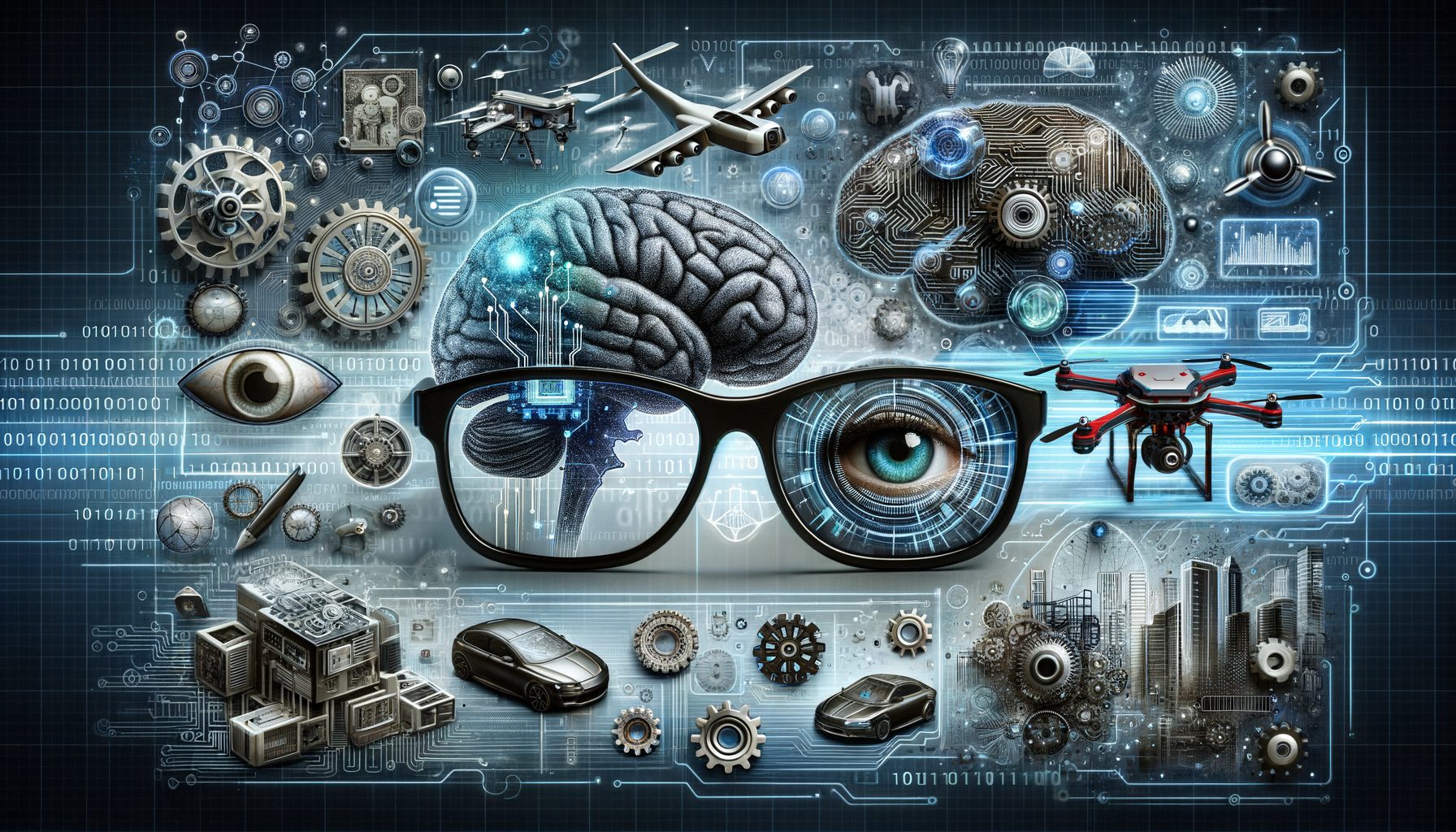
Visual AI is the ability of machines to interpret, reason about, and generate insights from images and video. Classic computer vision focused on handcrafted features and narrow tasks. Modern Visual AI combines deep learning, foundation models, and sometimes multimodal reasoning (text + images + audio) to solve complex, real-world problems. It can detect objects, recognize faces or parts, read text (OCR), segment pixels, estimate human pose, and increasingly explain the “why” behind what it sees.
The core problem Visual AI solves is attention. Humans miss things: we get tired, we cannot watch 1,000 cameras at once, and we struggle to quantify patterns over millions of frames. Visual AI never blinks. It monitors quality on production lines 24/7, spots health anomalies earlier, verifies safety compliance, and helps creators search vast media libraries in seconds. With edge deployment, it can do this in stores, farms, vehicles, and phones—no data center required.
What changed recently is accessibility. Open‑source models and cloud APIs have lowered costs. Pretrained weights and transfer learning let teams build accurate models with less data. Hardware accelerators put real‑time inference into small devices. Multimodal models now accept an image and a question (“What is the hazard here?”) and return a grounded answer. All of this means you can start fast, pilot cheaply, and expand with confidence.
Still, challenges exist. Data privacy and bias must be managed. Edge conditions—poor lighting, motion blur, occlusion—can degrade accuracy. And models drift when environments change. The answer is a disciplined approach: define measurable outcomes, collect representative data, test under real conditions, and operate models with MLOps basics (versioning, monitoring, feedback loops). Done right, Visual AI turns pixels into measurable business results—not just demos.
High‑Impact Visual AI Use Cases Across Industries
Retail and e‑commerce use Visual AI to track on‑shelf availability, detect misplaced items, and measure planogram compliance. Computer vision audits shelves more frequently than humans and can alert staff when products run out, reducing lost sales. Online, automated product tagging improves search and recommendations by understanding patterns, colors, textures, and styles. Visual try‑on and size estimation cut returns by setting realistic expectations and fitting guidance.
Manufacturing benefits from automated defect detection, component verification, and assembly validation. Vision systems catch scratches, misalignments, or missing parts in milliseconds. Unlike rule‑based inspection that often breaks when lighting or camera angles shift, modern models adapt using augmentation and fine‑tuning. Plants also deploy vision for worker safety: PPE compliance checks, restricted zone alerts, and forklift‑pedestrian interaction monitoring. The payoff is fewer defects, less downtime, and better overall equipment effectiveness (OEE).
Healthcare applies Visual AI to medical imaging—X‑rays, CT scans, MRIs, ultrasounds—where it can flag abnormalities and prioritize cases. Algorithms support clinicians, not replace them, by highlighting patterns that merit attention and reducing time to diagnosis. In digital pathology, vision models help quantify cell morphology and identify regions of interest. Beyond hospitals, telemedicine and smartphone‑based screening expand access, enabling early checks for skin lesions or diabetic retinopathy.
Agriculture uses drones and field cameras for crop monitoring, weed detection, and yield estimation. Vision models measure canopy coverage, detect nutrient stress, and guide variable‑rate application to improve sustainability and reduce inputs. In livestock, Visual AI tracks animal count, health indicators, and behavior, helping farmers respond faster and with data‑driven insights.
Transportation and smart cities leverage Visual AI for traffic counting, incident detection, lane occupancy, and toll enforcement. Fleet operators analyze driver behavior (distraction, drowsiness) and road hazards in real time. In logistics and warehousing, barcode‑free vision picks and automated dimensioning accelerate throughput while reducing manual scans.
Media and entertainment get value from automatic content moderation, scene detection, and highlights extraction. Editors can search “show me all clips of red cars at night” to assemble cuts in minutes. Sports teams and broadcasters use pose estimation and tracking to produce advanced analytics and fan‑friendly visualizations.
Security and compliance involve people detection, intrusion alerts, and queue monitoring. Many teams now combine Visual AI with privacy filters—blurring faces or hashing identifiers—so they comply with regulations while still gaining operational awareness.
The common thread is measurable outcomes: fewer stockouts, lower defect rates, faster triage, safer worksites, and more efficient operations. Whether your goal is revenue lift, cost reduction, or risk mitigation, Visual AI turns camera feeds into steady, auditable improvements.
Tools, Frameworks, and a Simple Implementation Playbook
You do not need to reinvent the wheel to build Visual AI. Most teams mix proven open‑source frameworks with cloud services and edge accelerators to achieve speed and reliability.
Core frameworks: – PyTorch for research and production flexibility (pytorch.org) – TensorFlow/Keras for scalable training and mobile export (tensorflow.org) – OpenCV for image processing and classical vision ops (opencv.org)
Popular model families and tools: – YOLO (e.g., Ultralytics) for fast object detection (ultralytics.com) – Segment Anything (SAM) for general‑purpose segmentation seeds (segment-anything.com) – CLIP‑style models for image‑text understanding – OCR stacks like Tesseract or PaddleOCR
Cloud APIs and managed platforms: – Google Vertex AI Vision (cloud.google.com) – AWS Amazon Rekognition (aws.amazon.com) – Microsoft Azure Computer Vision (azure.microsoft.com) – Multimodal assistants such as OpenAI GPT‑4o for reasoning about images (openai.com)
Deployment and optimization: – ONNX for model interchange and portability (onnx.ai) – NVIDIA TensorRT for low‑latency inference (developer.nvidia.com) – Edge runtimes via NVIDIA Jetson, Core ML, or Android NNAPI (NVIDIA Jetson, Core ML, NNAPI)
Data labeling and MLOps: – Label Studio and CVAT for annotation (Label Studio, CVAT) – MLflow and Weights & Biases for experiment tracking and model governance (mlflow.org, wandb.ai)
Simple implementation playbook: 1) Define a business metric. Example: “Reduce shelf stockouts by 20%” or “Cut defect escape rate to 0.2%.” Tie your model’s metric (e.g., mAP, recall) to the KPI it influences. 2) Collect representative data. Cover lighting changes, angles, seasons, and edge cases. Start small but diverse—hundreds to a few thousand images can seed a POC, especially with transfer learning. 3) Label and validate. Use consensus labeling and spot audits. Keep a separate, untouched test set from day one. 4) Train and iterate. Begin with a pretrained backbone (e.g., YOLOv8) and fine‑tune. Use augmentation (blur, brightness, perspective) that matches your environment. 5) Evaluate with the right metrics. For detection, [email protected]:0.95 on COCO‑style evaluation; for segmentation, mIoU or Dice; for OCR, CER/WER. Track latency and throughput too. 6) Deploy where it makes sense. Cloud for scale and batch analytics; edge for low latency, privacy, or unreliable connectivity. Use ONNX and TensorRT for speedups. 7) Operate the model. Monitor drift, log false positives/negatives, and close the loop with re‑labeling. Version everything—data, code, weights, and configs.
Useful datasets and metrics at a glance:
| Task | Typical Metric | Popular Datasets | Notes/Tools |
|---|---|---|---|
| Image Classification | Top‑1/Top‑5 Accuracy | ImageNet (~14M images) | Backbones for transfer learning (ResNet, ViT) in PyTorch/TensorFlow |
| Object Detection | mAP (COCO @0.50:0.95) | COCO (~330K images, 80 classes) | YOLO, Detectron2, Ultralytics workflows |
| Segmentation | mIoU, Dice | COCO, Cityscapes (~5K finely annotated) | SAM for masks, UNet/Mask R‑CNN for training |
| Pose Estimation | PCK, OKS | COCO‑Keypoints | OpenPose, MediaPipe for real‑time use |
| OCR | CER, WER | ICDAR benchmarks | Tesseract, PaddleOCR, layout parsers |
If you need synthetic data—useful when events are rare or labeling is costly—consider simulators and generators like NVIDIA Omniverse Replicator (developer.nvidia.com). Synthetic data can balance classes, stress unusual conditions, and improve robustness when paired with real samples.
Trends in Computer Vision for 2025 and Beyond
Multimodal models are becoming the default. Instead of only bounding boxes, teams want answers: “Is this shelf compliant to the planogram?” or “What is the likely cause of this defect?” Vision‑language models ground text in pixels and can explain or justify outputs, enabling richer workflows and fewer hand‑crafted rules. Expect tighter integration between visual perception and reasoning, making dashboards more like assistants than charts.
On‑device intelligence grows. Privacy and latency push inference to the edge. Compression, quantization, and distillation let models run on cameras, phones, and micro‑servers. This reduces cloud cost and network dependency while keeping sensitive visuals local. Tooling to manage fleets of edge models—secure updates, telemetry, and A/B testing—will mature rapidly.
Synthetic and programmatic data generation accelerates development. Whether via 3D engines, procedural worlds, or diffusion models, teams will fill data gaps and test edge cases earlier. The goal is not to replace real data but to complement it, reducing collection cycles and amplifying rare scenarios like safety incidents or extreme weather.
Foundation vision models with open weights broaden access. Open ecosystems improve transparency and enable custom fine‑tuning for niche domains (industrial parts, medical imaging, satellite). Combined with retrieval (linking to documents, CAD, or SOPs), Visual AI will move from recognition to action: detect an anomaly, pull the repair guide, and generate a checklist.
Governance becomes a first‑class requirement. Regulations like the EU’s work on AI rules emphasize risk classification, transparency, and data protection (European Commission AI policy). Expect standardized model cards, synthetic data disclosures, and privacy‑by‑design patterns (face blurring, on‑device processing, retention limits). Teams that invest in measurement (bias audits, fairness checks) will deploy at scale with fewer surprises.
Finally, agents that see and do will emerge. Vision‑enabled agents can monitor environments, create tickets, order parts, and nudge humans—all under guardrails. This closes the loop between detection and resolution, turning insights into actions without adding human toil to every step.
FAQ: Practical Questions About Visual AI
Q1: How much data do I need to start?
A: For many detection tasks, hundreds to a few thousand well‑labeled images can power a credible pilot if you use a pretrained model and strong augmentation. Aim for diversity over sheer volume: capture different angles, lighting, clutter, and rare events. Keep a clean test set from the start to avoid overfitting optimism.
Q2: Should I choose cloud APIs or build custom models?
A: If speed to value matters and your task matches what APIs offer (e.g., generic OCR, object labels), cloud can be fastest. If you need domain‑specific precision, run offline/edge, or have strict privacy rules, custom models are better. Many teams blend both: APIs for baseline tasks, custom for critical differentiators.
Q3: How do I handle privacy and compliance with cameras?
A: Minimize collection, process on device when possible, and mask sensitive elements (faces, license plates) early in the pipeline. Log only what you need for audits and improvement. Document purpose, retention, and access controls. Align with local laws and company policy, and run periodic privacy impact assessments.
Q4: What hardware do I need for real‑time inference?
A: For lightweight tasks, modern CPUs can suffice. For high‑FPS detection/segmentation, use GPUs (data center or edge via NVIDIA Jetson) or specialized accelerators. Optimize models with quantization and compile with TensorRT or similar. Always measure end‑to‑end latency, including camera capture, pre/post‑processing, and network hops.
Q5: How do I keep models accurate over time?
A: Monitor drift. Track confidence distributions, failure clusters, and environment changes. Set up feedback loops to capture mispredictions, re‑label, and retrain on a regular cadence. Version datasets and models, run regression tests, and treat your model like software—because it is.
Conclusion: From Pixels to Outcomes—Start Small, Scale Fast
Visual AI turns unstructured images and video into decisions that move the needle. We explored what Visual AI is and why it matters, where it delivers results across industries, which tools and platforms speed you up, and the trends reshaping computer vision—from multimodal reasoning to edge deployment and stronger governance. The playbook is consistent: define the business outcome, gather and label representative data, use pretrained models, evaluate with the right metrics, deploy where it makes sense, and operate with feedback loops.
The best next step is action. Pick one high‑value, low‑scope problem—like counting on‑shelf products or detecting a top defect—and run a tightly scoped pilot. Use open‑source baselines (YOLO, SAM, OpenCV) and track experiments with MLflow or Weights & Biases. If latency or privacy matters, plan for edge deployment with ONNX and TensorRT. Measure results against your KPI, not just mAP or mIoU, and build a path to production from day one: monitoring, alerts, and a re‑training schedule.
If you are unsure where to begin, browse state‑of‑the‑art models and code examples on Papers with Code (paperswithcode.com) and review datasets like COCO or ImageNet to see how tasks are structured. For a strategic angle, scan the Stanford AI Index to understand macro trends and investments (aiindex.stanford.edu). Then, align your pilot with a measurable business outcome and a realistic timeline (6–10 weeks is common for a POC).
Your cameras are already collecting value. Visual AI is how you unlock it—with responsible design, practical tooling, and relentless focus on outcomes. Start small, learn fast, and expand where the data proves impact. The sooner you launch a focused experiment, the sooner your organization builds the muscle to scale. Ready to turn pixels into progress? Pick one use case today, set a