
Sponsored Ads
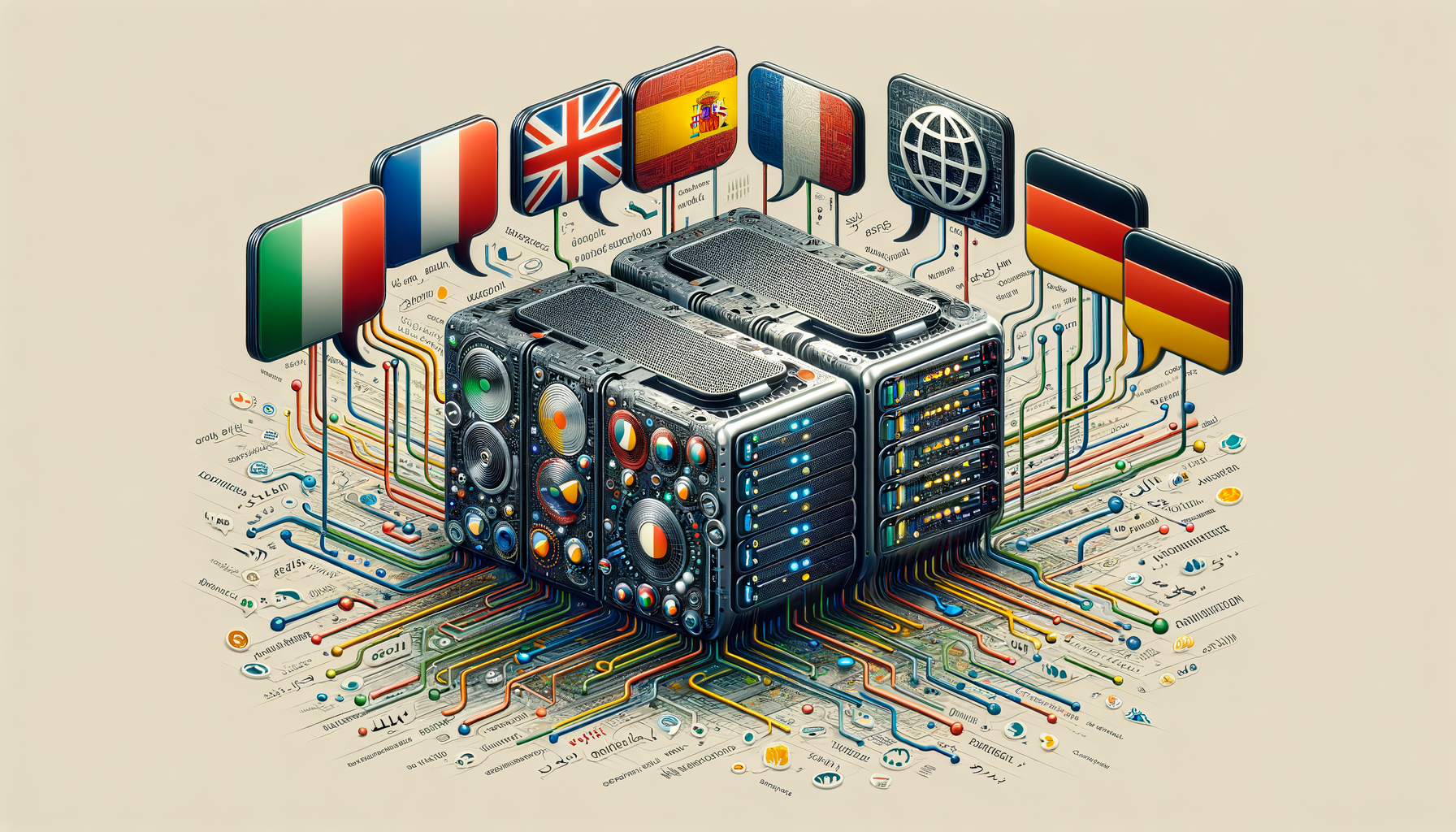
Serving a global audience is hard when your content exists in only one language. Product pages, help docs, and in-app messages all need to be understood instantly—without losing meaning or brand voice. Machine Translation is the AI that powers accurate multilingual content at scale, turning a translation bottleneck into a growth engine. In this guide, you’ll see how modern Machine Translation works, where it shines, how to improve quality step by step, and how to choose the right stack—so you can reach more users, faster, and with confidence.
The multilingual content problem—and how Machine Translation solves it
The core challenge is scale and speed. Businesses publish across websites, apps, social feeds, support portals, and internal knowledge bases. Each touchpoint demands fresh, localized content. Relying only on human translators limits throughput and inflates costs. A professional translator typically handles around 2,000–3,000 words per day, and per‑word rates for expert domains can be significant. For an ecommerce brand with 10,000 SKUs and frequent price or description changes, this becomes a never‑ending queue. For a support team receiving thousands of tickets per day in dozens of languages, it is unworkable without automation.
Machine Translation (MT) changes the equation by delivering instant, on‑demand conversions across many languages at a fraction of the cost. It is ideal for high‑volume, short‑lived, or time‑critical content: user reviews, chat support, search queries, social comments, and internal communications. With the right safeguards, MT also accelerates high‑value content like product pages or legal notices by giving human linguists a strong first draft to post‑edit. That workflow—often called “MTPE” (Machine Translation + Post‑Editing)—can reduce turnaround time dramatically while preserving accuracy.
Importantly, MT is no longer just a “good enough” fallback. With modern neural systems, quality for many language pairs rivals human output on common content types. However, quality still varies by domain, language pair, style, and complexity. Idioms, cultural nuance, and specialized terminology (medical, legal, financial) remain challenging without customization. The practical approach is to segment content by risk and value: automate what can be safely automated, and route sensitive text to human review. Done well, MT becomes a force multiplier—covering more languages, preserving tone through glossaries and style constraints, and shortening the time to market for every update.
How modern Machine Translation works: from NMT to LLM‑assisted workflows
Today’s MT is driven by Neural Machine Translation (NMT). Instead of translating word by word, NMT models map entire sequences from a source language to a target language, capturing context and long‑range dependencies. Most state‑of‑the‑art systems use transformer architectures trained on large parallel corpora (paired sentences) and monolingual data. They tokenize text into subword units, learn language patterns, and generate fluent output with beam search or sampling strategies. Benchmarks like the annual WMT shared tasks compare systems across language pairs and domains, pushing quality forward year after year.
Beyond vanilla NMT, providers and teams deploy smart enhancements. Domain adaptation fine‑tunes models on your specific datasets (product catalogs, support logs, legal templates) to align terminology and style. Glossary enforcement ensures brand names, product terms, and do‑not‑translate items stay consistent. Constrained decoding and custom prompts (for LLM‑assisted systems) help preserve style, gender, formality, and specific wording. Quality estimation models predict whether a sentence needs human review before it ever reaches a linguist.
Large Language Models (LLMs) increasingly support MT in two ways. First, as assistive tools: LLMs can perform in‑context translation with style instructions, suggest post‑edit options, or explain ambiguous phrases to human editors. Second, as quality controllers: LLMs can validate numeric consistency, flag hallucinations, and check glossary adherence. While pure LLM translation can be strong for some language pairs, most production pipelines still rely on optimized NMT engines for speed, cost, and predictability—then layer LLMs for validation, rewrites, or specialized content. The hybrid approach blends the reliability of NMT with the flexibility of LLM reasoning, delivering stability at scale without sacrificing nuance where it matters.
Getting to “accurate enough”: practical steps to improve quality
Accuracy is achievable when you design the workflow, not just pick an engine. Start with content triage. Categorize everything into tiers: low‑risk (user reviews, internal chat), medium‑risk (product listings, help center), and high‑risk (legal terms, clinical content). Automate the first category; send the third directly to expert linguists; run the middle through MT plus targeted post‑editing. This simple routing improves both quality and cost control immediately.
Next, prepare your text. Clean markup, expand abbreviations, and split sentences correctly. Maintain a living glossary of key terms with approved translations and do‑not‑translate entries. Define rules for numbers, currency, units, and date formats. Provide context wherever possible (product category, audience, intent). Many MT providers support glossaries or terminology injection; use them. For brand voice, share short, example‑driven style notes per language—formality level, tone (friendly vs. professional), punctuation preferences.
Invest in domain adaptation if your content is specialized. Fine‑tune on approved bilingual data, even if it is modest in size. For better returns, include high‑quality monolingual target data and use back‑translation to expand training sets. Evaluate rigorously: sample sentences, run blind tests, and score with both automatic metrics and human review. BLEU and chrF are fast to compute; COMET correlates better with human judgments and is widely used in research and industry. Track edit distance and post‑editor time to measure real productivity gains.
Finally, build human‑in‑the‑loop checkpoints. Use quality estimation to auto‑route risky sentences to editors. Decide on “light” versus “full” post‑editing based on content tier. Light PE focuses on meaning and readability; full PE adds style and brand polish. Close the loop by feeding approved edits back into your training data or dynamic memories. Over time, you will see fewer edits, tighter terminology control, and faster turnarounds. The result is not just accurate translation—it is consistent, on‑brand localization that scales with your roadmap.
Picking the right MT stack: providers, cost, privacy, and evaluation
Choosing an engine is less about a single “best” model and more about fit: your languages, domain, compliance needs, latency, and budget. Enterprise platforms like Google Cloud Translation, Microsoft Translator, Amazon Translate, and DeepL offer broad coverage, strong latency, glossaries, and enterprise controls. Open options such as Meta’s No Language Left Behind (NLLB) and OPUS‑MT give you maximum control and on‑premise deployment, at the cost of maintenance. Many teams use a mix: a commercial API for general content, a custom fine‑tuned model for domain‑critical flows, and an LLM for checks or rewrites.
Privacy and compliance matter. Verify data handling: Can you disable logging? Is there a zero‑retention mode? Where is data processed? Do you need on‑prem or VPC isolation? Most major providers publish detailed security measures and regional options. For cost, compare by characters, not words. Prices vary by tier, region, and features like custom models. Test latency and throughput for your peak loads—especially for live chat, search, and API‑driven translation at scale.
Below is a high‑level snapshot to orient your evaluation (always confirm the latest details on provider sites):
| Provider | Language coverage | Customization | Glossaries | Notable strengths | Typical pricing* |
|---|---|---|---|---|---|
| Google Cloud Translation | 100+ languages | AutoML custom models | Yes | Latency, scale, glossary enforcement | Per million characters; tiered |
| Microsoft Translator | 100+ languages | Custom Translator | Yes | Enterprise security, Speech integration | Per million characters; tiered |
| Amazon Translate | 70+ languages | Custom terminology | Yes | AWS ecosystem, batch workflows | Per million characters; tiered |
| DeepL API | Dozens (focus on EU/major languages) | Glossary, formality | Yes | Fluency and style in supported pairs | Subscription + character add‑ons |
| Meta NLLB | 200+ languages (many low‑resource) | Self‑host fine‑tuning | Via custom logic | Open models, coverage breadth | Infra cost (self‑hosted) |
| OPUS‑MT | Many pairs (community models) | Self‑host fine‑tuning | Via custom logic | Open, extensible | Infra cost (self‑hosted) |
*Pricing and features change over time; check official pages for the latest terms.
Whichever stack you choose, define success metrics before rollout. Track automatic scores (BLEU, chrF, COMET), human ratings, edit distance (TER), and cycle time from source to publish. Run A/B tests: does translated content improve conversion, reduce ticket resolution time, or increase retention? Consider participating in or referencing the WMT shared tasks results to align expectations on language‑pair difficulty. For process standards and quality frameworks, explore TAUS and COMET.
FAQs
Q: Is Machine Translation good enough for legal or medical documents?
A: Treat them as high‑risk. Use MT to support research or draft generation only, and require expert human review and approval. Domain‑adapted engines plus strict terminology can help, but compliance and liability demand professional oversight.
Q: How do I keep brand terms and product names consistent?
A: Build and enforce glossaries with do‑not‑translate rules. Most major providers support terminology injection. Pair this with a style guide per language and automated checks that flag violations before publishing.
Q: What metrics should I use to evaluate quality?
A: Combine automatic and human measures. Use COMET or chrF for better correlation with human judgment, track edit distance and post‑editor time for productivity, and run blind human evaluations on representative samples.
Q: Are LLMs replacing NMT for production translation?
A: Not broadly. LLMs are excellent assistants for rewrites, explanations, and quality checks, but NMT remains the backbone for cost‑efficient, low‑latency, predictable translation at scale. Many teams run hybrid pipelines to get the best of both.
Conclusion
Machine Translation has moved from a stopgap to a strategic capability. We began with the core problem: multilingual demand outstrips what human‑only workflows can deliver. You saw how modern NMT—and LLM‑assisted checks—translate large volumes instantly, while domain adaptation, glossaries, and human‑in‑the‑loop workflows lift accuracy to “publishable” levels for many content types. We covered how to pick a provider based on languages, privacy, cost, and latency, and how to evaluate success with both automatic metrics and human judgment.
Now act. Start with a pilot: choose one language pair, one content type, and a clear KPI (reduced turnaround time, increased conversion, or faster ticket resolution). Set up glossaries, define style, and split content by risk. Use an off‑the‑shelf NMT engine, add quality estimation and light post‑editing, and measure. In four weeks, compare outcomes with your baseline. If results are positive, expand to more languages and integrate into your CMS, help desk, or app pipeline. Keep feeding post‑edits back into your system for continuous improvement.
The world is ready for your voice—everywhere. With the right Machine Translation stack, your content can cross borders at the speed of product innovation, without losing clarity or brand trust. Start small, learn fast, scale confidently. What’s the first page, flow, or message you will unlock for a new audience today?
Sources
Conference on Machine Translation (WMT) shared tasks and results
Google Research: GNMT and Neural Machine Translation
Meta AI: No Language Left Behind (NLLB)
COMET: A neural framework for MT evaluation
Google Cloud Translation | Microsoft Translator | Amazon Translate | DeepL API
