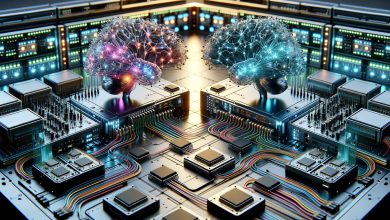
Modern AI shines in benchmarks but stumbles in the real world when data changes over time. That gap is where continual learning in AI becomes essential. The core problem is “catastrophic forgetting”: when a model learns something new, it overwrites what it already knew. If you deploy recommendation engines, fraud detectors, or on-device vision models, you’ve likely seen performance drift, stale predictions, or costly retraining cycles. This article explains how adaptive models that never forget can keep learning from streaming, non-stationary data while preserving past knowledge. We’ll explore why models forget, proven strategies to fix it, practical tools to start today, and how to deploy safely at scale—so your systems stay accurate, fast, and relevant without constant full retrains.
Sponsored Ads







Why Traditional Models Forget—and Why It Matters
Most machine learning systems assume a static dataset: shuffle, train, validate, deploy. Reality is messier. Data evolves (concept drift), classes appear or vanish, and usage patterns shift. When you retrain a model on new data without carefully managing past knowledge, you risk catastrophic forgetting—performance collapses on previously learned tasks. This isn’t just academic. A fraud model updated with new scams might miss old patterns. A customer support classifier fine-tuned for a new product line can suddenly misroute tickets from established categories. A vehicle perception model adapted to a new city may degrade in others. Each case creates user friction, safety risk, and higher operational costs.
Forgetting happens because gradient updates optimize for the latest batch, nudging weights toward the newest objective. In non-stationary settings, the model’s internal representation shifts, sometimes erasing earlier decision boundaries. Traditional fixes—full retraining on all historical data—are slow, expensive, and often impossible due to privacy or storage constraints. Edge devices make it even harder: limited compute, bandwidth, and energy amplify the challenge of retaining knowledge while learning on-device.
Continual learning (also called lifelong or incremental learning) tackles this by enabling models to learn from a sequence of tasks or data streams without losing prior capabilities. There are three common scenarios: task-incremental (task ID known at inference), domain-incremental (same labels, changing input distributions), and class-incremental (new classes appear, no task ID at inference). Class-incremental is the toughest because the model must distinguish both old and new classes simultaneously without hints. Success requires balancing plasticity (ability to adapt) and stability (ability to retain). Techniques like rehearsal (replay), regularization, and dynamic architectures aim to keep this balance. Get it right, and you unlock continuous improvement: lower retraining costs, faster adaptation to trends, improved personalization, and more robust systems that age gracefully rather than decay.
Core Strategies: Replay, Regularization, and Dynamic Architectures
Continual learning research has converged on three complementary families of methods. Each tackles forgetting from a different angle. In practice, teams often combine them along with careful data curation and evaluation.
Replay (or rehearsal) keeps a small memory of past examples or compressed representations. During updates, you mix new data with replayed samples, anchoring the model’s representation. Variants include experience replay buffers, coresets (carefully selected exemplars), feature replay (rehearsal in latent space), and generative replay (a small generative model synthesizes past samples). Replay is intuitive and effective, especially for class-incremental learning, but it introduces memory and privacy considerations. On-device, tiny buffers can still yield big gains by preventing representation drift on critical classes. Knowledge distillation—training the updated model to match the previous model’s logits on buffer data—further stabilizes predictions and reduces calibration shifts.
Regularization methods penalize weight changes that would harm previous tasks. Elastic Weight Consolidation (EWC) estimates parameter importance using the Fisher Information matrix, then discourages updates to critical weights. Synaptic Intelligence (SI) and Memory Aware Synapses (MAS) estimate importance online without a second pass. These methods are lightweight and memory-efficient, making them attractive for constrained settings. They work best when tasks are related and the model’s capacity is sufficient. However, under severe distribution shifts or long task sequences, regularization alone can struggle, especially in class-incremental scenarios without replay.
Dynamic architectures expand capacity as new tasks arrive. Options include adding task-specific adapters or heads, progressive networks that freeze old columns while adding new ones, and routing methods that learn to select sub-networks. This approach reduces interference by design and can dramatically cut forgetting. The trade-off is growing model size and potential complexity at inference time, especially if the task ID is unknown. Hybrid solutions use shared backbones with small, pluggable adapters to bound growth and keep latency predictable.
The table below summarizes practical trade-offs you’ll likely weigh in production.
| Technique | Forgetting Resistance | Memory/Compute Cost | Privacy Considerations | Best Use Cases |
|---|---|---|---|---|
| Replay (Exemplars) | High (with careful sampling + distillation) | Buffer scales with tasks; moderate training overhead | Storing raw data may be sensitive; consider anonymization or feature replay | Class-incremental learning, edge buffers, frequent label shifts |
| Regularization (EWC, SI, MAS) | Medium (strong on related tasks) | Low memory; small compute overhead to track importance | No raw data storage; privacy-friendly | On-device adaptation, bandwidth-limited updates |
| Dynamic Architectures (Adapters/Heads) | High (minimal interference) | Model size grows with tasks; inference can remain fast with routing | No raw data storage; structural growth only | Task-incremental, multi-tenant models, modular deployments |
| Generative Replay | High if generator quality is strong | Extra model to train; compute-intensive | No raw data; synthetic samples | Privacy-constrained domains, synthetic augmentation |
To choose a strategy, align with constraints: if you cannot store data, start with EWC/SI and small adapters. If accuracy on old classes is mission-critical, add a compact exemplar buffer and distillation. For long horizons with diverse tasks, modular adapters or progressive layers keep interference low. For reference implementations, see Avalanche from ContinualAI (link), which includes end-to-end baselines and metrics for replay, regularization, and dynamic methods.
Architectures, Tools, and a Practical Starter Playbook
Transformers, CNNs, and lightweight mobile models can all benefit from continual learning. On vision tasks, a shared backbone with adapter modules or LoRA-style low-rank updates works well: you freeze most weights and learn compact deltas per task or domain. For language models, parameter-efficient fine-tuning (PEFT) and prompt tuning can retain capabilities while adapting to new domains with minimal forgetting, especially when combined with rehearsal on small representative buffers. In recommendation systems, embedding replay and periodic distillation to a stable teacher can stabilize user and item representations during drift.
Tooling has matured. Avalanche (PyTorch) provides plug-and-play strategies, benchmarks like Split MNIST, Split CIFAR, and CORe50, plus metrics such as average accuracy and forgetting. For logging, use MLflow (link) or Weights & Biases (link) to track per-task performance and drift alerts. If you need privacy, consider federated learning with on-device updates and server-side aggregation (link) and complement with differential privacy (link) to bound data leakage.
Starter playbook:
1) Define your scenario. Is it class-incremental (new labels), domain-incremental (distribution shift), or task-incremental (separate heads)? This shapes your architecture choice and metrics. For class-incremental, plan a unified classifier without task IDs. For domain-incremental, focus on robust feature stability.
2) Establish a baseline and metrics. Train a single model on the first task. Add tasks sequentially without mitigation and measure average accuracy across all seen tasks, backward transfer (improvement or degradation on previous tasks), and forgetting metric (drop from best to current). Avalanche’s metric suite is a good starting point (link).
3) Add stabilization. Start with a small exemplar buffer (e.g., a few samples per class), plus knowledge distillation from the previous model. If data storage is restricted, try EWC or SI. For larger shifts or many tasks, introduce adapters or task-specific heads.
4) Keep training efficient. Use parameter-efficient tuning (adapters/LoRA) and mixed precision. Schedule periodic consolidation: distill the current model into a compact “teacher” that anchors future updates. Monitor calibration (e.g., expected calibration error) and add temperature scaling to stabilize confidence.
5) Validate under drift. Simulate changes using splits like Split CIFAR, CORe50 (link), or real logs. Inject class appearance/disappearance and measure robustness. Stress test with out-of-distribution detection to gate uncertain predictions.
6) Ship incrementally. Roll out updates behind feature flags, compare online A/B metrics, and maintain rollback to prior snapshots. Automate evaluation on “golden” replay sets that represent core use cases.
Foundational reading: EWC (link), distillation (link), surveys on continual learning (link; link), and task taxonomy (link). For a curated list of benchmarks and methods, see Papers With Code’s continual learning page (link) and ContinualAI (link).
Deployment, Safety, and Ethics: Learning on the Edge Without the Risks
Continual learning moves adaptation closer to real-time decisions, which is powerful—and risky if not governed. The first challenge is evaluation drift: if your monitoring only checks aggregate accuracy, you can miss slow forgetting on smaller but critical cohorts. Solve this by tracking per-segment metrics over time and comparing against each segment’s historical best. Maintain a stable “anchor suite” of tests that represent must-not-regress behaviors and include them in every update gate.
Privacy is next. Replay buffers can leak sensitive data if not handled carefully. Prefer feature replay (storing embeddings) or synthetic replay using a small generator trained with privacy-preserving techniques. When storing exemplars is necessary, apply strict retention policies, anonymization, and encryption at rest and in transit. For distributed settings, federated learning allows devices to learn locally and share only gradients or model deltas; pair with differential privacy to bound potential leakage.
Safety and robustness matter when models learn continuously from streaming inputs. Concept drift (link) can be subtle; add detectors (e.g., population statistics, PSI/JS divergence, or domain shift metrics) to trigger cautious updates. For out-of-distribution inputs, calibrate uncertainty and implement fallbacks: abstain, route to a human, or revert to a stable teacher. Maintain a versioned model registry and a staged rollout plan: canary traffic, shadow mode, then full deployment if guardrails pass.
On-device learning is attractive for personalization and latency, but compute and energy budgets limit options. Regularization-based updates and small adapters are ideal here. Use frameworks like TensorFlow Lite (link) and Core ML (link) for efficient inference; schedule background learning in low-power windows. Synchronize periodically with a server-side teacher via lightweight distillation to keep local models aligned with global knowledge.
Finally, make ethics part of the loop. As data evolves, so can bias. Continuously audit fairness metrics across protected attributes and geographies. When introducing replay, ensure diverse representation in memory. Document update policies with a model card that explains what the model learns over time, what data it stores, and how regressions are prevented. These practices aren’t just good citizenship; they reduce risk, build trust, and improve long-term performance.
Q&A: Fast Answers to Common Questions
Q1: What is catastrophic forgetting in simple terms? A1: It’s when a model learns new data and, in the process, loses performance on what it learned before—like overwriting old memories with new ones.
Q2: Do I always need to store past data for continual learning? A2: No. Regularization and dynamic architectures can work without storing raw data. If you can keep a tiny buffer of exemplars or features, results often improve.
Q3: Which scenario is hardest—task-, domain-, or class-incremental? A3: Class-incremental is typically the hardest because the model must distinguish old and new classes without being told which task it’s seeing.
Q4: How do I know if my model is forgetting? A4: Track average accuracy across all seen tasks, the “forgetting” metric (drop from each task’s best to current), and cohort-level performance over time.
Q5: Can continual learning run on phones or edge devices? A5: Yes, with lightweight methods like regularization and adapters, scheduled updates, and occasional distillation from a server-side teacher.
Conclusion: Build AI That Learns Continuously—and Responsibly
We explored the core problem—catastrophic forgetting—and why it hurts real-world AI as data shifts. You learned the three pillars of continual learning: replay to anchor representations, regularization to protect important weights, and dynamic architectures to separate concerns. We reviewed practical tools, from Avalanche and PEFT to federated learning and differential privacy, plus a step-by-step playbook to start: define your scenario, set metrics, stabilize with buffers or regularization, validate under drift, and ship safely with guardrails. We also covered deployment realities: privacy, robustness, on-device constraints, and ethical auditing.
If you’re maintaining models that degrade between retrains or missing fast-moving trends, now is the moment to pilot continual learning. Start with a small exemplar buffer and distillation, or try EWC/SI if data storage is constrained. Measure forgetting explicitly, add adapters for tough shifts, and automate gating with a rock-solid anchor suite. Not only will you cut retraining costs and improve freshness, you’ll deliver a better, more trustworthy user experience.
Take action today: pick one production model, define a simple class- or domain-incremental setup, and implement a minimal replay-plus-distillation loop using Avalanche. Log metrics, run an A/B, and iterate. Share your results with your team and set a path to expand. The payoff compounds—each day your model learns without forgetting is a day your system becomes smarter, safer, and more resilient.
Build AI that grows with your world, not against it. What’s the first model in your stack that deserves a memory upgrade?
Sources
• Kirkpatrick et al., “Overcoming Catastrophic Forgetting in Neural Networks” (EWC): https://arxiv.org/abs/1612.00796
• Hinton et al., “Distilling the Knowledge in a Neural Network”: https://arxiv.org/abs/1503.02531
• Delange et al., “A Continual Learning Survey”: https://arxiv.org/abs/1909.08383
• Lesort et al., “Continual Learning: A Comparative Study”: https://arxiv.org/abs/2010.02772
• Three scenarios for continual learning (taxonomy): https://arxiv.org/abs/1809.10635
• Avalanche Continual Learning Library: https://avalanche.continualai.org/
• Papers With Code—Continual Learning: <