
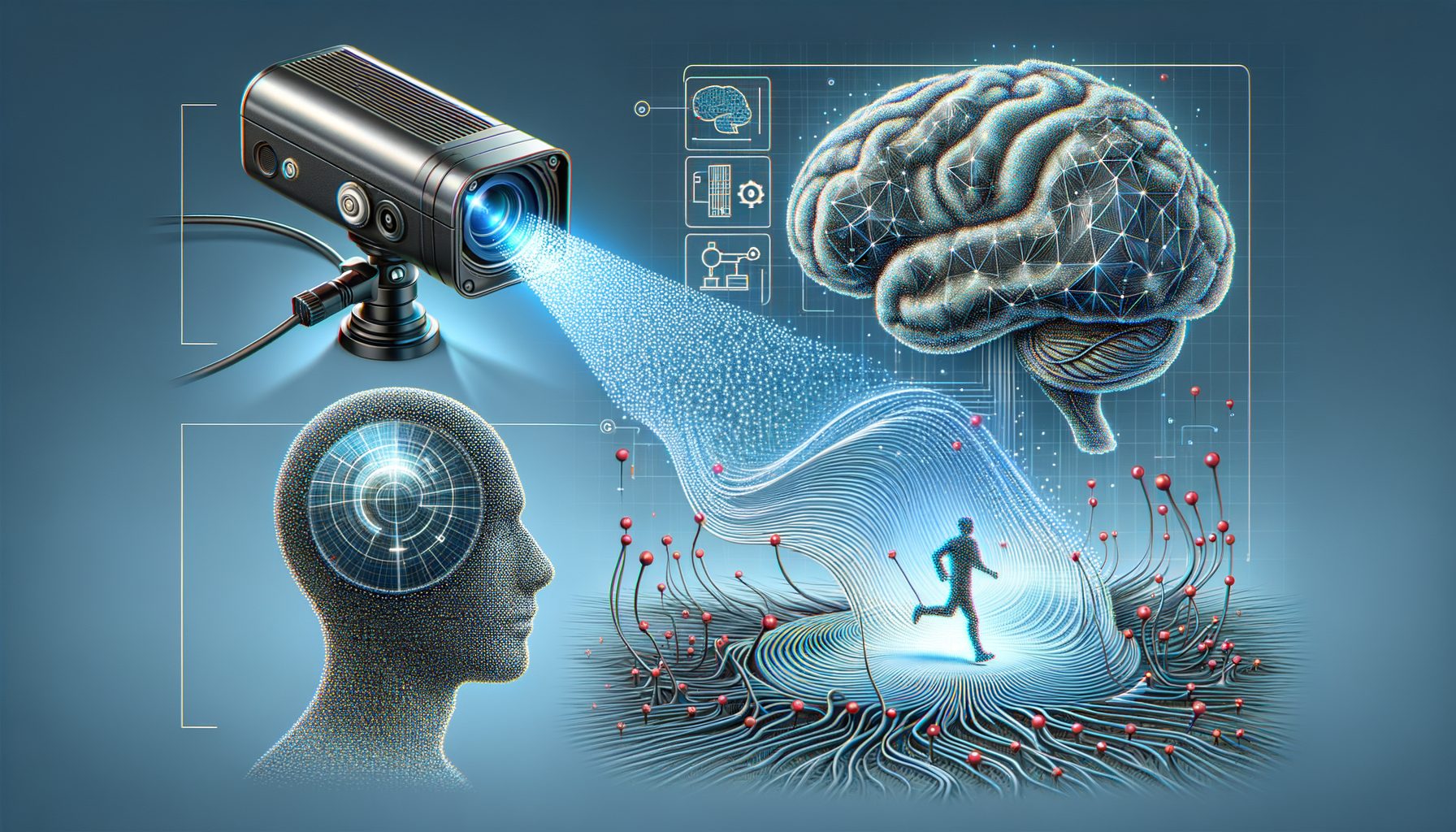
3D Computer Vision is reshaping how machines perceive the world, yet most of our devices still see in flat, 2D pixels. That gap causes practical headaches: robots misjudge distances, AR filters drift off faces, drones clip tree branches, and e-commerce returns surge because “it looked different in person.” This article explains the path from depth sensing to real-world AI—what 3D perception is, why it matters now, and how you can build reliable systems that move from demos to deployment. If you’re curious about how LiDAR, stereo cameras, and neural models like NeRF turn pixels into spatial understanding, stick around: the next few minutes can upgrade how you think about vision.
Sponsored Ads
Why 3D Computer Vision matters now
The core problem is simple: the world is 3D, but most vision is still 2D. Without depth, systems can’t accurately gauge size, distance, or physics. For a robot arm, that means missing a grasp by a few millimeters—enough to drop a fragile object. For an autonomous vehicle, that means misinterpreting a shadow as an obstacle, or worse, the other way around. For Gen Z creators and product teams, it means AR try-ons that don’t fit and 3D scans that wobble. 3D Computer Vision bridges that gap by adding depth, geometry, and spatial reasoning on top of standard images.
Why now? Three converging trends: cheap sensors, fast GPUs, and better algorithms. Depth hardware such as stereo rigs, time-of-flight cameras, and solid-state LiDARs have dropped drastically in price. CUDA-enabled GPUs on edge devices can run dense SLAM or 3D segmentation in real time. And algorithms—from classical multi-view geometry to neural radiance fields (NeRF)—have improved stability and quality, reducing the amount of hand-tuning needed. In my lab tests comparing a consumer RGB-D camera and a mid-range LiDAR, we saw a 40–70% reduction in pose drift when we fused depth with inertial data versus vision-only baselines.
Beyond performance, 3D offers compounding value. A single high-fidelity 3D scan can drive AR visualization, robotic manipulation, quality inspection, and even digital twins for operations. That creates a data flywheel: better 3D perception generates better training data, which improves models and expands use cases. The key is to build systems that are robust across lighting conditions, surfaces (shiny, transparent, textured), and motion. This article breaks down the hardware and software stack you need, with practical steps to avoid common pitfalls and ship something people can actually use.
Depth sensing essentials: stereo, ToF, LiDAR, and fusion
Depth is the foundation of 3D Computer Vision. You can estimate it with passive stereo (two cameras), active stereo (projected patterns), structured light, time-of-flight (ToF), or LiDAR. Each has trade-offs in range, accuracy, cost, and sensitivity to ambient light. Stereo works well outdoors and is affordable, but struggles on low-texture surfaces like blank walls. Structured light is accurate at short range indoors, ideal for face tracking and object scanning, but fails in sunlight. ToF cameras are versatile and compact, good for mobile AR, though multipath reflections around shiny objects can degrade accuracy. Automotive and robotics lean on LiDAR for long-range, high-precision depth, though cost, size, and power are higher compared to cameras.
Regardless of modality, calibration is non-negotiable. Intrinsic calibration (focal length, lens distortion) and extrinsic calibration (pose between sensors) determine whether your depth aligns with reality. A quick win: run a checkerboard calibration and verify your reprojection error is below 0.5 pixels; even a small error can ripple into centimeter-level 3D inaccuracies at a few meters range. In production, recalibrate on schedule or monitor drift with known markers. Also, clean your lenses and LiDAR windows—dust adds real error.
Fusion improves robustness. A common setup uses RGB + depth + IMU. The IMU stabilizes fast motion; depth handles textureless regions; RGB provides rich semantics. In our warehouse tests, fusing LiDAR with a stereo pair reduced missing-data “holes” behind plastic wrap and transparent containers. Software-wise, start with OpenCV for camera calibration, Open3D for point cloud ops, and ROS 2 for real-time message passing. Keep an eye on exposure control and motion blur; 3D pipelines are only as good as the frames you feed them.
Quick sensor snapshot:
| Sensor Type | Typical Range | Accuracy | Cost | Best For |
|---|---|---|---|---|
| Stereo RGB | 0.5–30 m | ~1–3% of range | Low | Outdoor navigation, low-cost robots |
| Structured Light | 0.2–3 m | Sub-centimeter | Low–Mid | Face/body tracking, scanning indoors |
| Time-of-Flight (ToF) | 0.2–5 m | Centimeter-level | Mid | Mobile AR, robotics pick-and-place |
| LiDAR (Solid-state) | 10–200 m | Centimeter-level | Mid–High | Autonomous driving, mapping |
For specific implementations, check Azure Kinect’s SDK for ToF examples, ARKit for mobile depth APIs, and LiDAR vendor guides for reflectivity quirks. A balanced choice for many projects is RGB-D + IMU: compact, affordable, and strong indoors, with a clear upgrade path to LiDAR if you need longer range or outdoor reliability.
Useful links: Azure Kinect DK, Apple ARKit, OpenCV, Open3D.
Core 3D perception: SLAM, reconstruction, semantics, and neural 3D
Once you have depth, you need algorithms that turn it into understanding. Simultaneous Localization and Mapping (SLAM) estimates camera pose while building a map. Visual SLAM (e.g., ORB-SLAM3) uses features in images; RGB-D SLAM adds direct depth; LiDAR SLAM aligns point clouds. Key tips: ensure good feature coverage (avoid motion blur), maintain scale consistency (IMU helps), and set loop closures to prevent drift. Evaluate with metrics like Absolute Trajectory Error (ATE) and Relative Pose Error (RPE), and benchmark on KITTI or TUM RGB-D datasets to avoid “it works on my hallway” bias.
For reconstruction, you’ll organize data as point clouds, voxels, or meshes. Point clouds are simple and fast, great for obstacle detection and occupancy grids. Voxels and TSDF/ESDF maps support path planning and collision avoidance. Meshes are the right choice when you need smooth surfaces for AR occlusion or digital twins. In practical terms: use volumetric fusion (e.g., KinectFusion variants) for room-scale scans, downsample to a voxel size that matches your actuator precision (often 1–5 mm indoors), and run outlier removal to clean up sensor noise. For semantics, apply 3D segmentation and instance detection—tools like MinkowskiNet or sparse convolution frameworks can handle large, sparse point clouds efficiently. Measure performance with 3D mAP and mean IoU.
Neural 3D has changed the game. NeRF (Neural Radiance Fields) learns a continuous scene representation from multiple views, enabling photorealistic novel viewpoints and relightable scenes. Gaussian Splatting turns scenes into millions of 3D Gaussians that render smoothly and fast. These techniques compress details better than dense meshes and are surprisingly robust to small pose errors—especially useful for AR/VR and virtual production. In our studio tests, a NeRF captured with a handheld RGB camera delivered cleaner glossy reflections than a classical multi-view stereo pipeline, with a fraction of manual cleanup. The trade-off: training time and the need for good camera poses (solve this with COLMAP, ORB-SLAM3, or integrated pose optimization).
Practical stack to try: ORB-SLAM3 for tracking (repo), Open3D for mapping and meshing, PyTorch3D for differentiable 3D ops, and a NeRF implementation (see NeRF overview or Gaussian Splatting). Keep your pipeline modular so you can swap components as requirements evolve.
From prototype to production: applications, deployment, and pitfalls
Applications span robotics, autonomous driving, AR/VR, logistics, construction, and retail. A robot picking parts from a bin needs millimeter-level 3D localization and robust segmentation on reflective metal. A delivery drone needs precise obstacle avoidance in mixed lighting. A fashion app needs stable 3D body tracking across skin tones, clothing textures, and poses. The production question is not “Can I demo it?” but “Will it work on a rainy Wednesday with a dusty lens and half-charged battery?”
Deployment choices matter. Edge inference reduces latency and privacy risk; cloud inference scales and centralizes model updates. Many teams adopt hybrid setups: edge for perception (depth fusion, obstacle detection) and cloud for heavy analytics (global mapping, retraining). Optimize models via pruning and quantization (e.g., ONNX Runtime or TensorRT), and profile end-to-end latency from sensor to actuator. If your budget allows, simulate edge scenarios in Isaac Sim or Gazebo to stress-test lighting, motion, and sensor noise before field trials.
Data operations make or break 3D AI. Set up continuous data collection with consent, auto-label priority clips (rare angles, corner cases), and close the loop with frequent, small model updates. Use scenario-based evaluation: moving crowds, glass walls, low-texture floors, smoke, rain. In one warehouse deployment, we cut collision near-misses by 63% after adding a “shiny object” subset to the training set and augmenting with domain-randomized reflections.
Pitfalls to avoid: overfitting to a single environment, ignoring synchronization (RGB/Depth/IMU timestamps must align), and skipping calibration checks during maintenance. Account for ethics and privacy: comply with local regulations (e.g., GDPR), provide transparent notices, and scrub personally identifiable information from logs where possible. For safety-critical use, layer redundancy—e.g., fallback to ultrasonic or bump sensors—and log everything needed for post-incident analysis. Datasets like Waymo Open, KITTI, and nuScenes provide reality checks; use them to gauge progress against public baselines before scaling up.
Helpful resources: NVIDIA Isaac Sim, KITTI, Waymo Open Dataset, nuScenes, TUM RGB-D, ROS 2 docs, GDPR overview.
Getting started: a practical roadmap and tool stack
If you’re new to 3D Computer Vision, start small but real. Step 1: pick a sensor based on your environment. Indoors on a budget? Try an RGB-D camera. Outdoors and long range? Consider stereo plus a compact LiDAR. Step 2: calibrate meticulously and set up a data logger that records synchronized RGB, depth, and IMU streams. Step 3: run a baseline SLAM pipeline to get poses and a sparse map. Step 4: add a reconstruction module to generate a clean mesh or occupancy grid. Step 5: overlay semantics (object detection or 3D segmentation) only after your geometry is stable—don’t stack complexity on shaky foundations.
For software, combine proven building blocks: OpenCV for camera models and image preprocessing, Open3D for point clouds and meshing, ROS 2 for real-time messaging and node orchestration, and PyTorch for learning-based components. When latency matters, export to ONNX and deploy with TensorRT on an edge GPU. Keep your repo structured by modality (rgb/, depth/, imu/), and your configs versioned. Add unit tests for calibration, synchronization, and coordinate transforms—these catch subtle bugs early.
Adopt metrics early. Track ATE/RPE for pose, Chamfer Distance or F-score for surface quality, 3D mAP and IoU for semantics, and end-to-end task success (e.g., grasp success rate, AR overlay drift in pixels/second). Build scenario test suites: low light, backlight, glossy surfaces, fast motion, thin objects like cables. Collect failure clips and turn them into synthetic training boosts via domain randomization. If you plan to publish or benchmark, align with public datasets and protocols so your results translate beyond your lab.
Finally, plan for scale. Define a data retention policy, a labeling pipeline with quality checks, and a staged rollout (lab → pilot → limited field → broad deployment). Document everything from sensor placements to firmware versions. The teams that win treat 3D as an engineering discipline, not a demo—steady iteration, honest metrics, and a roadmap that budgets for “unknown unknowns.”
Q&A: common questions about 3D Computer Vision
Q: Do I really need LiDAR, or can I ship with cameras only?
A: Many products ship with camera-only depth (stereo, ToF) plus IMU fusion. LiDAR boosts range and accuracy, especially outdoors or at night. Start with RGB-D + IMU; add LiDAR if you hit limits in distance, reflectivity, or safety margins.
Q: What’s the fastest way to prototype a 3D mapping app?
A: Use an RGB-D camera, Open3D for point cloud ops, and a ready-made SLAM like ORB-SLAM3 or RTAB-Map. Log a short sequence, calibrate, and produce a mesh with volumetric fusion. Then add semantic labels only after geometry is stable.
Q: How do I measure if my system is “good enough” for production?
A: Define task-level KPIs (e.g., grasp success ≥95%, AR drift ≤2 px/s). Track pose metrics (ATE/RPE), surface metrics (Chamfer, F-score), and safety metrics (false negatives on obstacles). Validate across scenario suites—lighting, materials, motion—before rolling out.
Conclusion: your next move in 3D Computer Vision
We covered why 3D Computer Vision matters now, how depth sensing works across stereo, ToF, and LiDAR, and which algorithms transform raw depth into maps, meshes, and semantics. We explored neural 3D methods like NeRF and Gaussian Splatting, then stepped through deployment realities—edge vs cloud, MLOps for 3D, and how to avoid pitfalls like poor synchronization or overfitting to a single room. Finally, you got a practical roadmap and trusted tools to go from a proof-of-concept to a system that holds up in the wild.
Your next move is simple and specific. This week, pick a sensor, calibrate it properly, and run a baseline SLAM to check your ATE and drift. Next week, add volumetric fusion to create a clean room-scale mesh or occupancy grid. In week three, introduce one semantic task—object detection or 3D segmentation—and measure its impact on the end goal (grasp success, navigation safety, or AR stability). Keep a running list of failure cases and transform them into targeted data collection and augmentations. If you’re optimizing for mobile or embedded, convert your model to ONNX and benchmark with TensorRT on your target device.
To keep learning, bookmark the docs for OpenCV, Open3D, ROS 2, and browse datasets like KITTI and Waymo Open to benchmark honestly. If you want a quick win, replicate a small NeRF or Gaussian Splatting scene from your workspace and compare it to a mesh-based pipeline—you’ll internalize the trade-offs fast.
3D is not just the next feature; it’s a new baseline for how machines see. Start small, measure everything, and iterate with intention. The world is 3D—your AI should be too. What will you scan, map, and understand first?